So much of cruising is about weather watching. The more you watch the weather, the more in tune with it you become. Perfect predictions are rare. Here we were, at Errol Flynn Marina in Port Antonio, Jamaica, wanting to get to the Bahamas via the Windward Passage between Cuba and Haiti. I was watching the weather via PredictWind and thought we had a good weather window for some time during the week of November 21st, but as the days went by the weather just didn’t seem to hold. As each day passed, the weather window continued to move further out and get shorter. During this time, we kept discussing the weather with our boat buddies and finally decided that the best window would be on the 25th. So, we left Port Antonio on the 25th of November at 6:00 am. Three boats heading to Matthew Town on Great Inagua Island. This was a 254 nm passage that took us about 1.75 days.
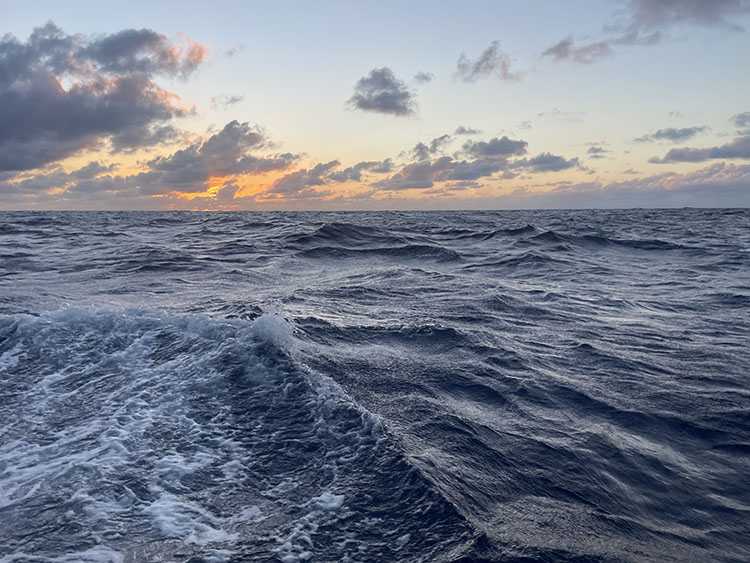
We were the slowest boat and lost sight of the other two boats on AIS within 12 hours. The fact that we now couldn’t follow them wasn’t too important as we had already decided to do as much easting as possible, not wanting a repeat of the passage from Panama to Jamaica bashing to windward. We were still pinching as tight as we could to make as much easting as possible, but at least we were sailing and making headway.
As if hand steering wasn’t bad enough, No Regrets decided we needed more boat projects to deal with. So, on this passage, the main sail furling mechanism decided to stop working while the main was fully deployed. It appeared that the furling drum and the foil, the sail wraps around in the mast, separated from one another, so when I tried to furl the sail, the drum spun but the sail didn’t furl. This wasn’t a problem at the moment, but as the wind increased, I wished I had been able to reef the main. Luckily, the wind didn’t get too strong. I did have a concern about not being able to furl the main when we anchored but really couldn’t do anything about it. We would just have to make do and hope the wind wasn’t howling at the anchorage.
I was glad we had made as much easting along the coast of Haiti as we had because we were able to sail all the way to Matthew Town without being close hauled. Unfortunately, due to the time we took easting, we didn’t arrive until 11:30 pm on the 26th of November. It’s always a little spooky coming into an anchorage in the dark, but we anchored without issues and let the main flap in the light breeze. Jack, on our buddy boat, had stayed up to see if we needed any help with the mainsail. So over VHF, I thanked him and told him we would address it in the morning, as we were too tired to do deal with it then.
The next morning Jack and the guy on the third boat came over to look at the situation with the main furler. To get to the furling mechanism, we needed to remove the boom and gooseneck from the mast. With three of us, it was easy to remove the boom and tie it up so it wouldn’t damage the boat. Once the boom was secured, the two guys left me to figure out how to fix the furler.
Three small screws hold the foil to the furling drum, and they had all fallen out. Many months ago, I found a small screw near the base of the mast but didn’t know where it came from. A second one had fallen out at another time and during the passage from Jamaica, the last screw fell out. I found that one at the base of the mast when we took the boom off. It was good to finally know where that screw, I found on the deck many months ago, came from. I had saved that screw and with the one, I found on the deck that morning, I only needed one more screw. With luck, I had that and a few more in my tackle box of screws. It was a very simple fix. I decided to use some Loctite on the screws so they would be more inclined to stay in place. Reattaching the gooseneck and boom to the mast was easy and I was able to do it with a little help from Lynette. By mid-morning, I was able to furl the main with no issues.
Next on the list was to check into the Bahamas. Jack came by with his dinghy and we went in together to the Port Captain’s office. There was a mail boat at the dock and almost everyone in town was there to sort out their supplies to take home. The residents order much of what they need and have it delivered by the mail boat. I’m not sure how often the boat comes, but it is regular enough for everyone to order what they need and come to the dock to pick up their orders. The dock was very busy.
The Bahamas has a website for paying the $300 cruising fee via credit card. It’s not the best website, and while in Jamaica with very slow internet, I spent quite a bit of time trying to fill out the online form and pay our fee. I was eventually successful, but it did try my patience. Starlink is going to be one of my next purchases.
Because the port was busy that morning, it took some time to get checked in. The Port Captain was very nice and accommodating. He got all the paperwork together and after at least an hour, we were finally checked into the Bahamas.
We stayed at anchor for another night, then headed north for Landrail Point, Crooked Island on Monday, the 28th of November at 1:00 pm, a 118nm passage. Jack and his family headed west to the Ragged Islands, so we were on our own again. We needed to make water, so we motor sailed for a while to fill our water tanks. We had good wind, so when we were done making water, we sailed the rest of the way. At one point we had both the yankee and staysail out making 6 knots in 12 knots of wind. I just looked at my log notes and I had written that this had to be one of the best passages we’ve ever had. It was a starboard beam reach to close reach almost the entire way. The seas were calm, and the wind never got above 17 knots. We arrived and anchored in sand in 15’ of water at noon on the 29th. A strong NE wind was predicted for the next few days, and from what we had read, this anchorage would be reasonably protected.
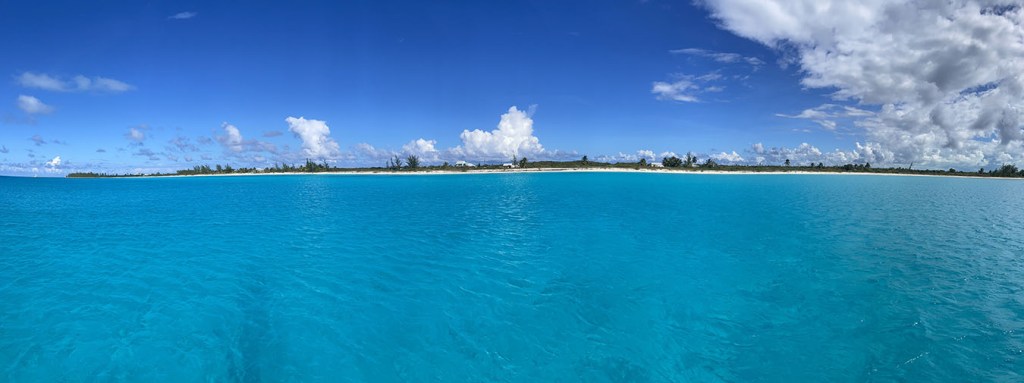
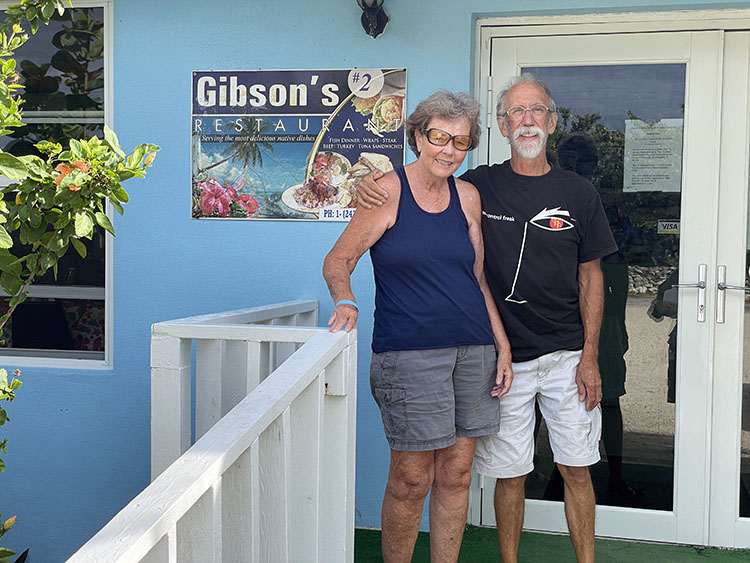
We needed eggs, as Matthew Town didn’t have any, so the next day we put the dinghy in the water and motored over to a small landing. I had done some research earlier that morning about places to eat and Active Captain had several comments about a great little restaurant. When we landed, I called to make a reservation for lunch, and we were offered a ride to the restaurant. Within a few minutes, someone came to the landing and picked us up. The restaurant was small and in what looked like a modified home. The place was empty except for a group of local men eating lunch. The food was excellent and very inexpensive. We paid $40, including tip, for a multi-course meal with drinks and key lime pie for dessert. Several people were putting up a Christmas tree and decorations around the restaurant, and I help assemble the stand for the tree as they couldn’t figure out how it went together. I was glad I could help. After lunch, we were taken to a very small grocery store to provision. They had eggs and diesel, so we filled 3 jerry cans and got eggs along with a few other items. This was the most expensive diesel we had purchased at $8.18 per gallon. It was also the dirtiest diesel we had purchased.
The dinghy ride into town had been smooth as we were going with the wind. The ride back was a bit sporty as the wind had picked up and it was right on our nose. We were quite wet by the time we got back to the boat.
As predicted, the wind continued to increase from the NE and blow for the next few days. When we had anchored, we tucked in as close to the shore as we dared to be as protected as possible. The winds got up into the low 30s at times and the water was a bit choppy, but we were reasonably protected from the wind. The wind finally subsided on December 4th, so we plotted a course to the south end of Long Island, a short 5-hour hop. We had been anchored at Landrail Point for 5 days, most of it waiting for our next weather window. We weighed anchor at 10:00 am and were off to a good start in 13 knots of wind with full main and yankee carrying us at 6.8 knots on a starboard broad reach. Within an hour, the wind had picked up to about 20 knots, so we put a single reef in the yankee. We anchored off the south end of Long Island at 3:00 pm. It took two tries to anchor as the first try was in sand over something hard, so the anchor wouldn’t grab. On the second try the anchor dug in and held well.
This anchorage was only an overnight stop for us and there wasn’t much around. We went to bed early as we needed to be up the following morning at 3:00 am to make the passage to Thompson Bay further north on Long Island. Interestingly, the bay is only 34nm north of where we were, but the water between us and Thompson’s Bay is so shallow with many rocks requiring us to go around the shallows making the passage 69nm. Half of it going in the wrong direction just to avoid the rocks and shallows.
We had to leave early in the morning as this was going to be our first passage in skinny water, and we wanted to do that part of the passage during the day. The first half of the passage was in deep water, so we had no worries about doing that portion in the dark. We arrived at the skinny water at daybreak and followed the magenta line on our charts to the anchorage.
Ah, the magenta line on the charts. Yes, this is the secret to traveling in the Bahamas. Many charts have magenta passage lines that are “safe” routes to follow through the shallow Bahama Banks, which comprise much of the cruising grounds of the Bahamas. Sometimes on our Navionics charts, we would be following a magenta line and suddenly it would just end, leaving us with no safe route to follow. Through talks with cruisers, we found that the Explorer Charts are the best for the Bahamas, so we downloaded the Aqua Map App and purchased the Explorer Charts while we were at the restaurant at Longrail Point. Much better than the Navionics charts.
Back to the passage. We got up at 3:00 am and left around 3:45 am. We followed our track back out to the open water without incident and headed west. We had good wind and were cruising along on a starboard close reach at 6.8 knots in 15 knots of wind. We arrived at the shallow water around 8:30 am, dropped the sails, and began motoring following the magenta line.
This was our first time on the Banks in the Bahamas, and I was a bit nervous at going 5.5 knots in 10-12 feet of water with rocks in the vicinity, but I put my trust in the magenta line and followed it to the anchorage. We arrived without incident at 4:15 pm on December 5th and put the hook down in 9 feet of water in sand. It had been an excellent passage and a great first time in skinny water. We were going to have a great night’s sleep, as the anchorage was very calm. Sleep was much needed after a long day’s passage.

The next morning, December 6th, we left for George Town at 8:00 am. The winds were between 12-15 knots from the NE, a good starboard broad reach sail to our anchorage. We anchored in 9 feet of sand at 3:30 pm at a place between the main anchorages on Stocking Island to the east and George Town, called Da Middle, which it was. right in the middle with not much protection. It was early in the season, so there were only 30-40 boats at anchor at Stocking Island. Some friends were there in February and counted 344 boats anchored in the area. Quite a difference.

It was calm the next morning so we took the dinghy off the boat. The plan was for me to go get diesel and propane, come back to the boat, and then both of us to go in for groceries and lunch. For some unremembered reason, this didn’t happen that day and we waited until the following day to take the dinghy to town. The wind had picked up a bit so my ride in to get fuel was a little bumpy, but the wind was from behind, so it was a dry ride. The ride back to the boat was another story. Not only had the wind increased, but the wind waves were also bad. It was a very rough and wet ride. There was no way Lynette was going to endure a ride in the dinghy, so I called a water taxi to take us in and bring us back. That was a very wise decision. Yes, it cost $30, but the ride was dry and much more comfortable than the dinghy. We walked down the street from the grocery store and had a good lunch at Island Boy Café. The grocery store wasn’t big, but for the Bahamas, it was quite large and well-stocked.
We left the next morning at 8:40 am on December 9th for an anchorage at Big Galliot Cay. This was a 40nm passage that required timing to get through the two cuts we had to navigate. Cuts are narrow channels between islands that have very strong currents during rising and ebbing tides. Our route required us to go out into deep water through one cut and back into the shallow water at another cut. We didn’t worry about timing the first cut, Conch Cay Cut, as Active Captain didn’t have warnings about timing the transit with the tides. I was wrong in assuming it would be ok. The wind was blowing from the east and I believe the tide was going out. We had massive waves going through the cut and at full throttle, we were only doing about 2 knots. We were going out with another boat, so had figured all was good. Luckily, we did make it without incident, but one wave was massive and as I watched the other boat go up and over, I was reminded of the movie The Perfect Storm. Needless to say, I was a bit shaken.
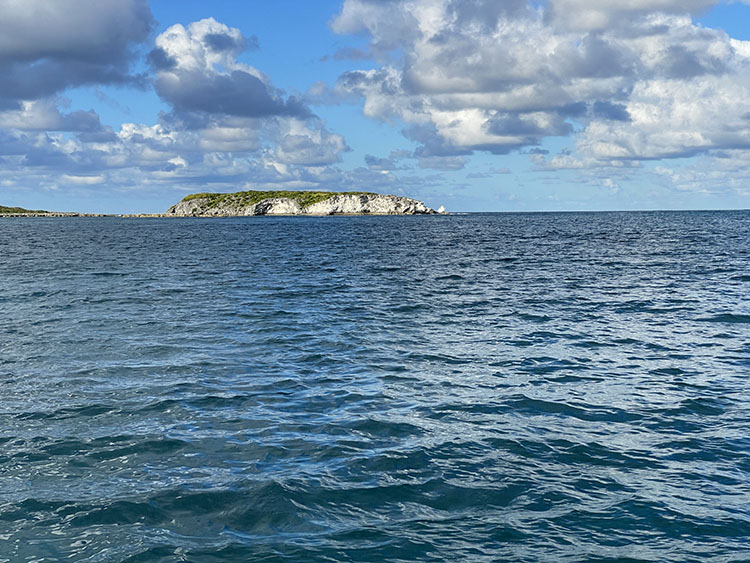
We motor sailed most of the way up the east side of the Exumas. The wind was light, and the seas were not rough. I timed the passage so we would arrive at Cave Cay Cut during slack tide. We furled the sails and headed through the cut with no issues. New rule: never go through any cut in the Bahamas without taking the wind and tides into account, regardless of what Active Captain says or doesn’t say.
We motored the rest of the way to our anchorage at Big Galliot Cay for an overnight stop. There was one other boat in the anchorage, so we dropped the hook in 10 feet of water a safe distance from them at 4:00 pm. The anchorage was protected from the east wind and was very calm.
The next morning, we left at 5:30 am for Highborne Cay, a 61nm passage. We motor sailed with the wind almost on our nose until about 9:00 am. At that time our route made a slight turn, and we were able to sail for about 3 hours. It was back to motor sailing for the rest of the passage as the wind had eased and was mostly on the nose. We anchored in 16 feet of water in sand and grass at 5:30 pm. It took a couple of tries to get the anchor to set, but it finally did. There were many boats in this anchorage
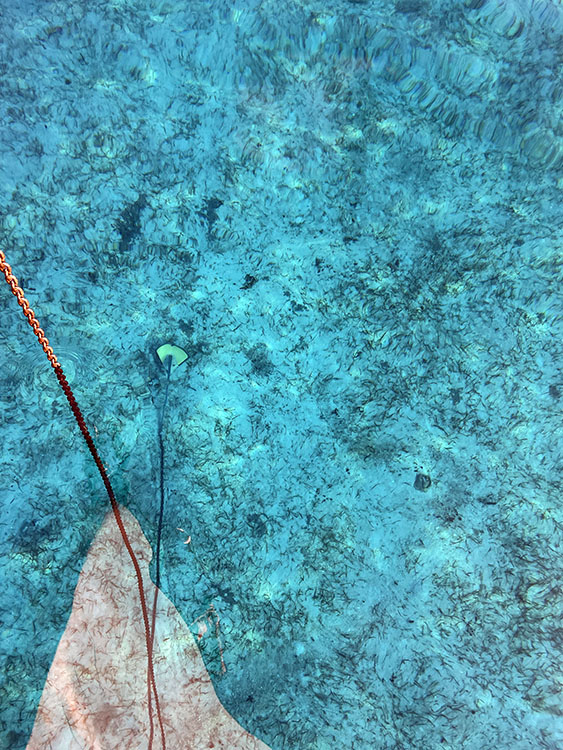
It was now Sunday, December 11th and we needed fuel for the passage to Florida. Highborne Cay has a very nice resort with a small marina and fuel dock. I called to arrange for someone to be at the fuel dock and we weighed anchor at 7:30 am to be at the fuel dock by 8:00 am. When I went to the bow to raise the anchor, I snapped a picture of the anchor on the bottom at 16 feet. The water was so clear I could easily see the anchor on the bottom.
All fueled up, we left Highborne Cay at 8:30 am for West Bay on New Providence Island, a passage of 46nm. There was no wind, and we motored the entire distance anchoring at 4:45 pm in sand in 9 feet of water. It was kind of a boring passage through water that averaged 10-12 feet the entire distance. We just followed the magenta line on the chart and watched the motorboats zoom by as if we were standing still.

The next morning at 9:30 am we weighed anchor and motored to Chub Cay. The wind was about 10 knots on the nose, so we motored the whole 31nm and anchored in 7.5 feet in sand at 3:30 pm. The anchorage had a swell when we got there but it was very calm by morning. This was supposed to be our last stop in the Bahamas before crossing the Gulf Stream and reaching Florida. It was also going to be where we checked out of the Bahamas, but after doing some research and emails with authorities, we were told that if we were going back to the US, we didn’t need to check out. That was nice, as it saved us a dinghy ride to town for the checkout.
Weather prediction for crossing the Gulf Stream was a bit tenuous, looking like a possible blow coming through the area. We had hoped we could miss most of it, so we set off for Florida at 9:00 am on Tuesday, December 13th. It was supposed to be a 143nm passage. The winds were light, so we motor sailed on a beam reach in 5 knots of wind. By mid-afternoon, the north swell was starting to roll the boat uncomfortably, but the winds were still low, and we continued to motor sail with the main up to help control the roll. By evening the wind had increased to about 10 knots and we were now sailing on main and reefed yankee at 5.5 knots on a starboard broad reach. The winds kept increasing to gusts of 30 knots and the sea became very rough in the early morning hours. We furled the yankee and had two reefs in the main motor sailing. It was too rough to continue, so we discussed our options and headed south to Bimini to hide from the wind blowing from the east-southeast. The lee of Bimini would provide some protection until morning and then we’d decide what we would do next. We tucked in close to shore and anchored at 6:50 am dead tired and ready to get some sleep. At least Bimini was providing some protection from the wind and the anchorage wasn’t terrible. It wasn’t our original plan, and the 143nm passage to Florida turned into a 102nm passage to Bimini. At least Bimini was close enough for us to make the detour and find protection from the wind and seas.

We woke late in the morning and decided that we really would be miserable at anchor as the anchorage wasn’t all that comfortable. I radioed Brown’s Marina and got a slip for a few days. We motored around to the harbor and tied up at one of the slips. It had been a very good decision and Lynette was very happy we were at a marina. These docks were different than what we had been used to. The pilings were on the outside, so the boat rested against the pilings instead of the dock. The pilings had some protection on them, but not much. We were told not to use our fenders as they would get caught by the pilings when we pulled in. That was certainly a first for us. After the boat was secure, we took showers and had a good late lunch at the restaurant onsite. After the passage from Chub Cay, we were both very tired, so it was off to bed early.
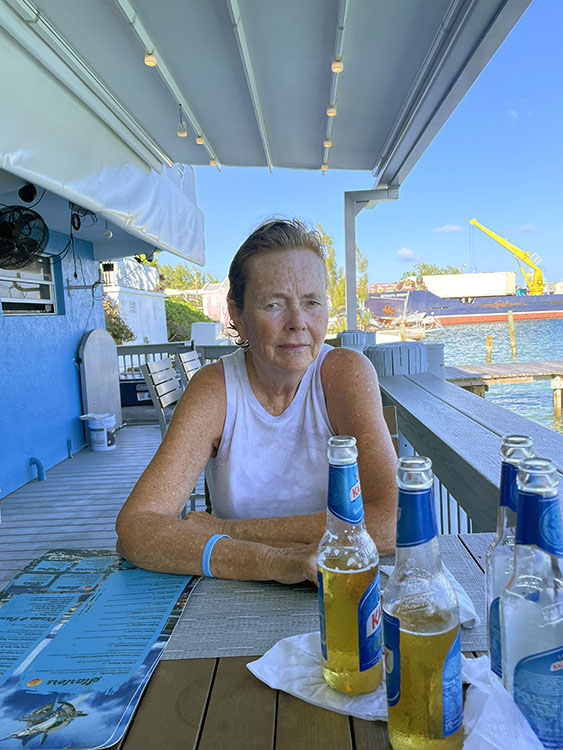
The next morning, I checked the weather and it appeared we had one small window to leave around 5:00 pm the following evening, so we spent the day just resting and doing much of nothing. It felt good to take a day off, as we’d been moving every day since we left George Town. In the afternoon of the following day, a family pulled into the marina that had just come from Miami. They told us it was a rough passage, and that they were new to sailing. None of them were happy about the rough passage and they never wanted to do that again. They said they had been warned about the bad weather but didn’t heed the advice to leave in the evening instead of the morning, as they didn’t feel comfortable sailing at night. They paid the price and had a very rough passage with both kids sick. We left for West Palm Beach, Florida, at 5:30 pm that evening, Thursday, December 15th.

Stay tuned, next time, for our trip to Florida.


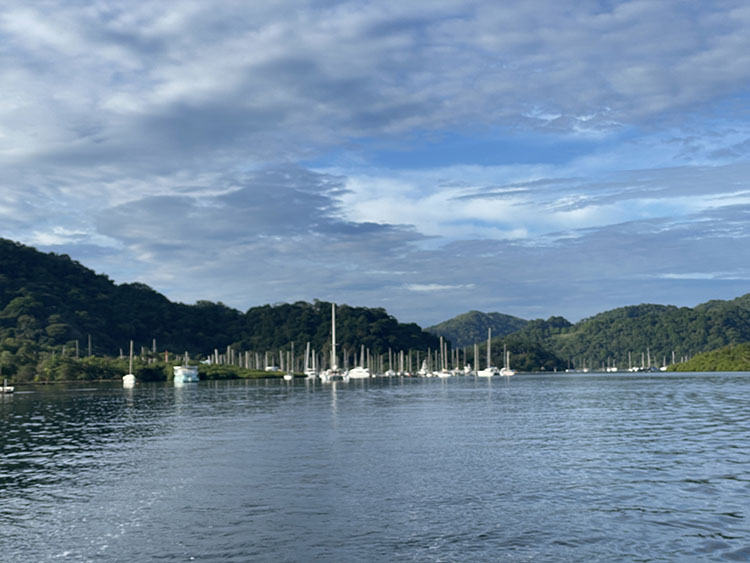

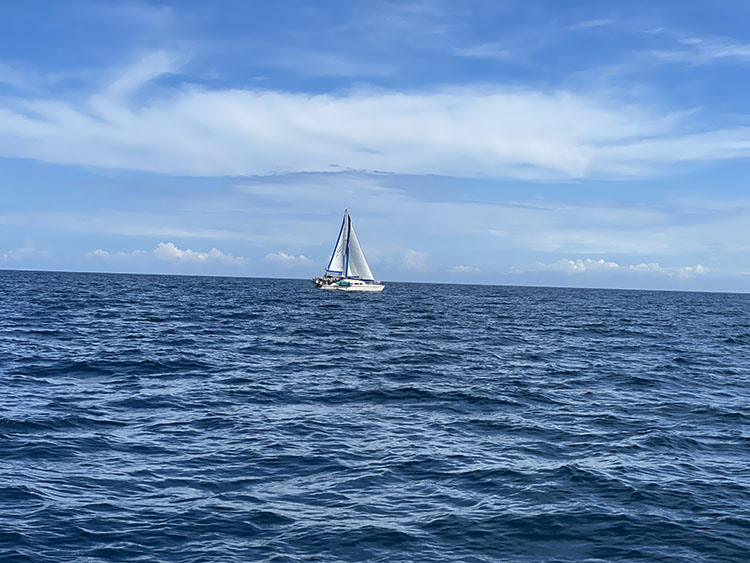
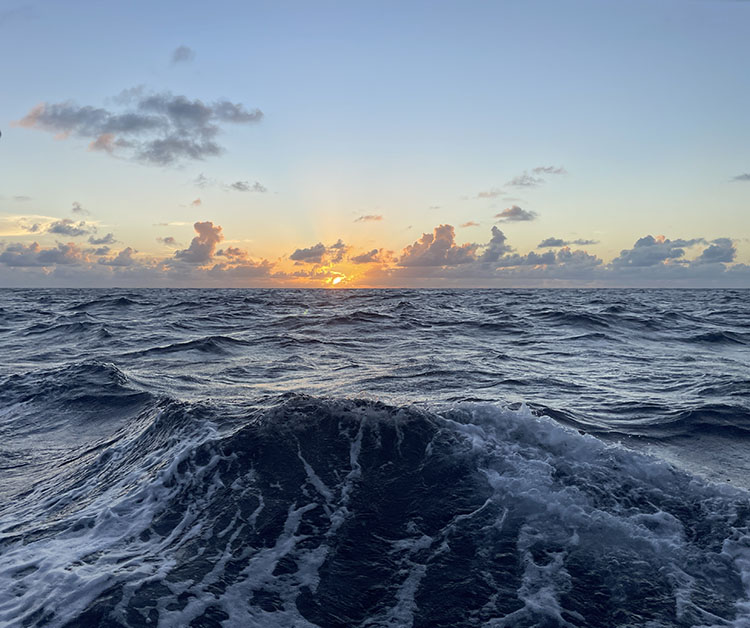


 Sailing into our next chapter