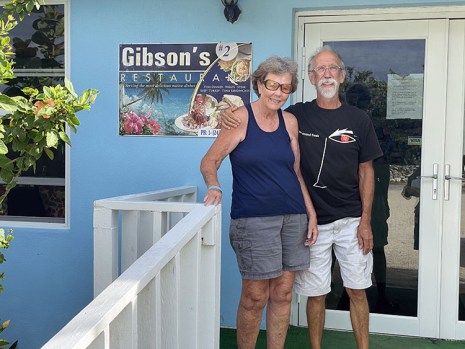
We’ve been in St Petersburg for a week now and are planning the process of readying No Regrets for sale and finalizing the purchase of our new-to-us catamaran. We have rented an ADU (accessory dwelling unit) from a couple. It is above their garage and fully furnished as we do not have any furniture. Living here for a couple of months will give us the space and time to work on No Regrets without living in the mess the boat will be in. The landlord graciously allowed us to store our stuff from No Regrets in their garage, so we didn’t have to rent a storage unit.
We cleaned, fixed, varnished, painted, and performed general maintenance on No Regrets to prep her for pictures for an ad and make her presentable for showing. First on the list was to move as much as we could off the boat and into the garage. Doing this gave us the room to clean and work on the inside.
At the same time, we were jumping through hoops to find insurance and secure a loan for the new boat. Finding insurance was a bit difficult as many companies won’t insure catamarans anymore, and many have restrictions on where the boat can be sailed. We wound up with a Markel Jackline policy. It wasn’t inexpensive, but it did provide us with a very large sailing region that covered the entire Caribbean Sea Securing a loan was also difficult as there was only one lender that would underwrite loans for liveaboards. As of spring of this year, they no longer underwrite loans for liveaboards.
We did secure a loan and insurance, closing on our new-to-us boat, Cerca Trova, in mid-April. We moved out of the ADU shortly after that and onto our new home. It was nice to have more room, but we still had way too much stuff, even for a catamaran. I can’t believe we had so much stuff on a much smaller boat. With No Regrets at her dock waiting for a buyer to come along, our focus changed to cleaning, fixing, and doing updates on Cerca Trova.
The very first day on Cerca Trova had me troubleshooting an alarm going off in the boat. Argh, this should have been a warning. I figured out that it was a bilge alarm. My first new boat project was to replace the starboard bilge pump float switch which was the cause of the alarm, a rather simple project. The first of many projects to come.
Lynette was busy cleaning and sorting out what we needed and didn’t need on the boat. New rugs in the bathroom, new shower curtains, new sheets for both beds and new towels for the guest side of the boat. I started learning about the systems on Cerca Trova as this boat was new to me and quite a bit more complicated, with a different watermaker, generator, two air conditioners, and a different brand of electronics. Lots to learn about.
The next system to break was the refrigerator/freezer compressor. It overheated because the cooling fan stopped working. We used Lynette’s hair dryer and the saloon fans to keep the compressor cool. It worked until I could purchase a new fan and install it. Another rather simple project. Then the AC stopped working. I figured out, with a call to a very nice AC tech, that it was an overheating error and so had to clean the raw water strainer for the AC units. Yet another easy fix. All within the first week of living on Cerca Trova.
Meanwhile, we had several lookers and two surveys on No Regrets by the time we were ready to leave St Petersburg. As we were readying to leave, the last prospect turned into the buyer, and we struck a deal for less than we wanted but given that we were leaving it made sense to let No Regrets go for their offer. We concluded all the paperwork while underway and sent off the final documents while we were in Coconut Grove.
I had taken for granted that I knew all the systems on No Regrets, as I had installed them all. My stress level was quite high when we took off on Cerca Trova from St Petersburg on June 1, 2023. During my first attempts to use and understand our new autopilot, I had an accidental jibe that had the boom break the helm hatch right off its hinges. Live and learn. Keep the hatch lower than the boom.
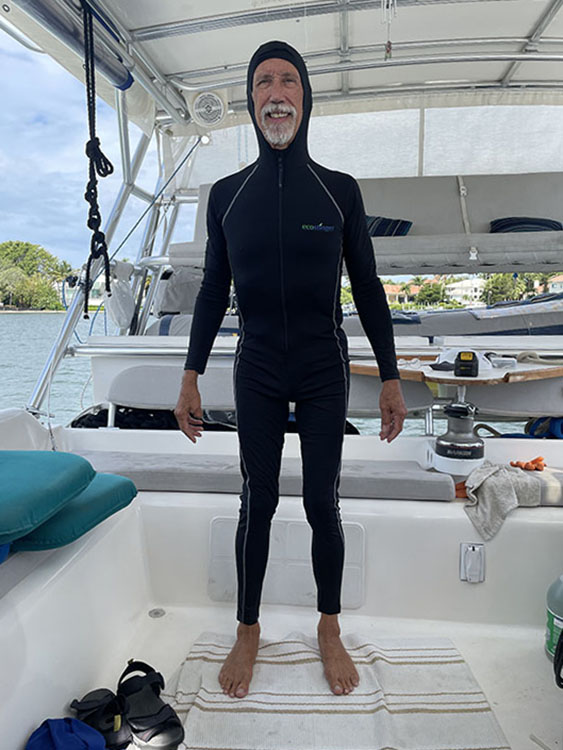
We didn’t have the bottom cleaned before we left the marina, which was a mistake. The engines would only rev up to 1800rpm. Normally they could go up to 2800rpm. I assumed the props had barnacles on them, so at our first anchorage at Otter Key I dove in and cleaned them. They were heavily covered with barnacles.

Otter Key is a lovely and quiet anchorage. As we weren’t in a hurry, we stayed for 3 days just hanging out and enjoying the space on our new boat. It was nice to just do nothing and not worry about any deadlines or schedules. When we left Otter Key, I was able to get the engines to rev up to our normal cruising speed of 2600rpm, so cleaning the props worked. Another simple fix.
As we worked our way south along the West Coast of Florida, we anchored at Don Pedro, Pelican Bay, and Big Carlos Pass Bridge before doing our first overnight to Marathon in the Keys. These were day passages that were easy and uneventful. When we got to Big Carlos Pass Bridge, I couldn’t reach the bridge tender to request a bridge opening, so we anchored outside the bridge for the night. I did some calling around and found out you need to make an appointment to have the bridge opened. It was damaged in Hurricane Ian, and to open it required bringing a generator to the bridge for power as the electrical wiring had been damaged and they were waiting for parts. Bringing a generator to the bridge was quite an ordeal and not something they did very often. We were happy to just anchor outside the bridge for the night.

Several times on passage the electronics blinked out and then restarted. The last time it did this we were on our way to Pelican Bay, and they didn’t come back on. Quickly I used Navionics on my phone (always have a backup) and was able to successfully get to the anchorage and set the hook. Upon examination of the electrical circuits, I found a badly charred jumper wire in the electrical panel. There were spare parts onboard, so I made a new jumper wire and got the electronics back up and running with no further issues.

On our way to Marathon, Lynette fell getting off the aft cockpit seat. She was in quite a bit of pain for days. This just shows how quickly accidents can happen onboard. We stayed at Marathon for an extra day hoping she would feel better. She was still in pain when we left on July 10th for Garden Cove South anchorage. We overnighted there and took a mooring ball the next evening at Dinner Key in Coconut Grove, FL, which is just south of Miami. Lynette was still hurting, so we made an appointment for her to see a doctor and get an X-ray. We had thought she had a cracked or broken rib. Nothing was broken and they sent her packing with a 600mg Ibuprofen prescription. She did get better over time and the Ibuprofen helped with the pain. We were lucky this time. It could have been worse.

In the morning of June 13th, we fueled up and headed to Hillsboro inlet, a 41.5nm passage. Hillsboro inlet has a tiny cove surrounded by older condos. There’s a drawbridge and a lighthouse, which makes it quite a picturesque place, except for the condos. When we arrived, there were several police boats at one of the anchored boats with their lights flashing. We weren’t sure what was going on, so we stayed out of their way and found probably the last place to anchor in that little cove.
The next morning, we were off to Lake Worth to visit some Panama Posse friends whom we had met in San Diego. We’ve met so many great people being a part of the Panama Posse and this couple were some of them. They were moored at Lake Worth for the summer. They offered to make us dinner and bring it over to our boat, so I broke out a fresh bottle of Bourbon and we had a great meal and caught up on what had been happening since we last met up. They came back to our boat the next night for beers and snacks. It was so good to see them and catch up on things. We sadly left them the next morning, pointing our bow north up the ICW.
While I managed most of the day-to-day running of the boat and preparing routes to follow, Lynette researched places to anchor within a reasonable distance for daily travels. Reasonable distance amounts to approximately 40nm per day. Peck Lake was our next anchorage, which is a wide spot in the road, and satisfied our daily run distance of 40nm. Nothing special here, just a place to park and sleep for the night.
Lynette found a quaint little anchorage up a narrow channel for our next night, called Faber Cove. It was a small circular little cove with small houses all around the perimeter. There was only room for a couple of boats to anchor and we were the only ones there. We enjoy finding places like Faber Cove to anchor as opposed to wide spots in the road. They make our travels more interesting.
Our next night was just north of Melbourne called Paradise Blvd. This was another wide spot in the road. We had just dropped the hook and were in time for a SpaceX rocket launch from Cape Canaveral. Since we were south of Cape Canaveral and the wind was blowing south, we had our best opportunity to hear the roar of the rocket engines as the rocket ascended. I find rocket launches to be quite spectacular. Growing up on the West Coast of the US, I had never seen a live rocket launch. Being near Cape Canaveral and watching live rocket launches wasn’t really on my bucket list, but I would say it is up there as things I wanted to see.
Every night on our passage up the East Coast of Florida we had thunderstorms. The wind comes up in the evening and we get to experience a spectacular light show. Of all the things that I can be afraid of while sailing the oceans, lightning is probably my most feared event. You never know if you are going to get hit by lightning, and when it’s all around you the chances go up. Plus, it doesn’t help that we have this 60’ lightning rod attached to our boat. We have two static suppressors at the top of our mast and a grounding cable that we attach to the base of the mast and toss the other end into the water to ground the mast. I’m not sure how much this deters the lightning, but we have yet to get a direct strike (fingers crossed).

Titusville was our next stop. We had come full circle to our northernmost point in Florida, having gone all the way around Florida from Titusville to St Petersburg and back in about 6 months. We planned to spend a couple of days in a slip to take on supplies, but they didn’t have a dock available when we arrived, so we took one of their mooring balls for the night. That night we witnessed our worst lightning storm. I had the wind instrument on to track the wind speed and was watching as it hit 51 knots. Suddenly there was a bright flash and a simultaneous loud boom. The wind display went blank. We hadn’t been hit by lightning, but it was very close. The next morning, we took our slip at the marina, and I got to talking with some people on the dock. Everyone said the previous night’s thunderstorm was the worst they had encountered.
I knew that our wind instrument had stopped working, but it was still spinning at the top of the mast. I felt sure we hadn’t been hit by lightning, as I assumed the wind instrument would have vaporized if we had. I turned on all the electronics to see what was still working. It seems everything was working except the wind instrument and the heading sensor that tells the autopilot which way the boat is pointing. So, a new project to focus on. This one was going to be a bit expensive.
I hired an electronics guy to come to the boat and help me diagnose the issue. He was recommended by the marina staff and was fair with his time and cost. $100 later, I had a plan to get back up and running. The problem was that we only had the slip for 2 days and there were no parts available in Titusville. After doing my research online I found a good price for the heading sensor and wind instrument, along with the black box that translates the wind instrument data to digital data for the other instruments (analog to NMEA2000 converter). All that came to about $1500. The network wiring on the boat was poorly installed, so I decided to replace all the NMEA2000 network wiring and connectors for a cleaner and easier-to-understand installation. I think I spent about $2000 total and had it shipped to our next marina in Beaufort, SC where I would do the installation.
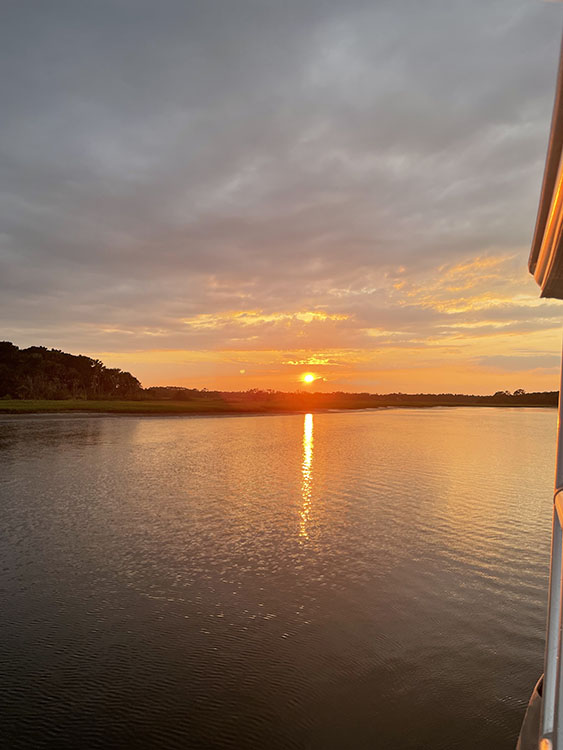
Off we went up the ICW on June 22, 2023. We had heard that many people go offshore and pass by Georgia, as the ICW in Georgia has many shallows and is very crooked. It is mostly marshland with not much to see. Since we were without a wind instrument and an autopilot, we decided to take the long and winding route through Georgia via the ICW. We anchored six times along the way to Beaufort, SC. Each passage was in the 40nm range that we were comfortable doing in a day. The passage to Beaufort was uneventful and a bit boring. We anchored several times in thick mud, which was no fun weighing anchor in the morning, but we did get it up every time. We also saw some dolphins along the way. Nice to see some wildlife besides birds.

We arrived at Lady’s Island Marina in Beaufort, SC on June 28, 2023. We would have arrived around 3:30 pm, but we missed the last swing bridge opening in Beaufort before the afternoon rush hour closing. We had to anchor and wait for 3 hours for the next opening at 6:00 pm. We radioed the marina and the dockmaster said he would wait for us and help us tie up. At 7:00 pm we were finally secured at the dock and ready for dinner and a good night’s sleep.
Next up, repairs in Beaufort and the passage to New Bern, NC.
 Sailing into our next chapter