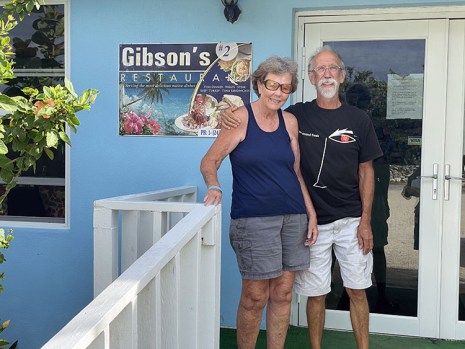
September 10, 2022, had been a long day but we were finally done with the Panama Canal transit. After showers and a burger at the marina restaurant, we walked back to the boat and were faced with a total mess in the galley. There was pasta sauce all over, pans that needed to be cleaned, and dishes that were left by the 7 of us (the two of us, 4 line handlers, and the canal advisor) that had eaten breakfast and lunch. What a mess, and to top it off we were tired as we’d been up since 3:00 am and it was now about 7:00 pm. We decided to leave the mess until morning and went to bed.
During the canal transit, our starter battery finally failed. I had known that it was on its last legs for a while, as the starter was getting slower and slower each time I started the engine. By the time we arrived at Shelter Bay, the engine would no longer turn over and I had to switch to the house battery bank to start the engine the last time I started it. This was just one more thing to add to the growing fix-it list.
Over the next week, I looked into finding a replacement start battery. I tried to get one locally and what was available didn’t quite fit our configuration, so I ordered one from the US. The marine chandlery we used has a regular shipment that comes to Panama, but I missed the boat by one day. There is only one boat per month to Panama, so our new battery had to wait for the next boat the following month. This meant we wouldn’t receive the battery until the end of October.
I didn’t want to use the house battery bank to start the engine for fear of damaging those batteries, so the boat sat as we waited for the new battery to arrive. Part of me wished I had purchased a local battery and not waited for the exact replacement battery. Waiting for a battery caused us to miss out on exploring the east coast of Panama as we had planned. We missed going to Bocas del Toro and the San Blas Islands. Kind of a shame, but they are still there, and we can always go back to explore these areas.

Meanwhile, there was the fix-it list that needed to be addressed, so we started working on reducing the size of that list. The night before we transited the canal there had been a very heavy surge at the La Playita Marina causing one of our line chocks to break off the toe rail. This needed to be repaired, but before I reinstalled the chock the entire toe rail needed a few more coats of finish. After several days of putting polyurethane on the toe rail, it was finally ready for the chock to be reinstalled. Reinstalling the chock was an easy task, as I had the correct size and length screws to reattach it. Even though we carry a very good supply of nuts, bolts, screws, and washers on board, I usually don’t have the right size for the job. It was a pleasant surprise that I had what I needed.

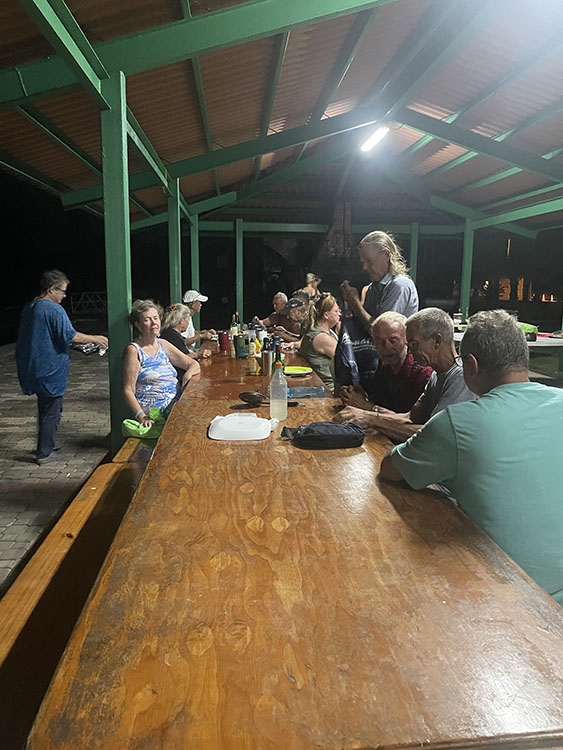
We enjoyed our two-month stay at Shelter Bay Marina. Shelter Bay has a great cruising community that is quite active. We had potlucks every Sunday. You bring a dish to share, something to throw on the grill, and your own drinks, then sit down and enjoy great conversations with the other cruisers that are at the marina. We also participated in Happy Hour every Wednesday with snacks to share and our own drinks. There were nature walks, free bus rides to town for supplies, and music jam nights. All quite fun and this made our stay both memorable and enjoyable. The time flew by.
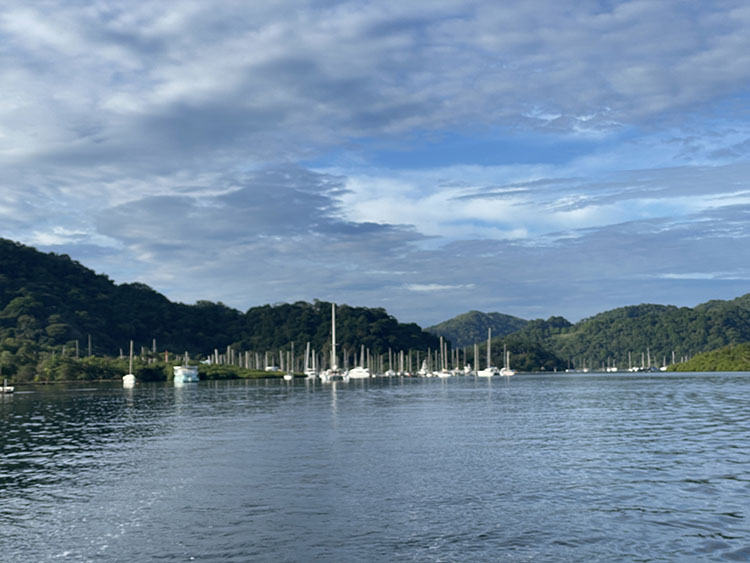
We had met a family in Barra De Navidad who were now at Shelter Bay Marina. The family consisted of mom, dad, three kids, and a dog on a 37’ catamaran named Kyrie! They were doing some repairs on their boat and getting ready to head toward the US. We were heading in the same direction, so we decided to buddy boat. When all the projects were almost done, and our starter battery had arrived we started watching the weather for a favorable window. We left on September 8th in the morning for a 29nm run to Linton Bay for Pizza, Beer, some fuel, and an overnight anchorage. The next morning, we headed to Guna Yala (San Blass Islands) to overnight at the swimming pool. We grounded twice trying to get close to Kyrie but could not find a way around the sandbar. They have a shallower draft, so could anchor in much shallower water. We finally found a way around the sandbar and anchored reasonably close to them.

The next morning Kristen and Joe came over to discuss our next passage and have coffee. The plans were made for the day; we would leave in the afternoon as there was concern the weather window to Jamaica wouldn’t hold. Meanwhile, being anchored in crystal clear water I decided to try out my homemade hookah and clean the bottom of the boat. It was a tiring task that left me quite exhausted after several hours of cleaning. The hookah was a great success, though. Lynette went for a swim in the warm, clear water while I was busy cleaning the bottom.
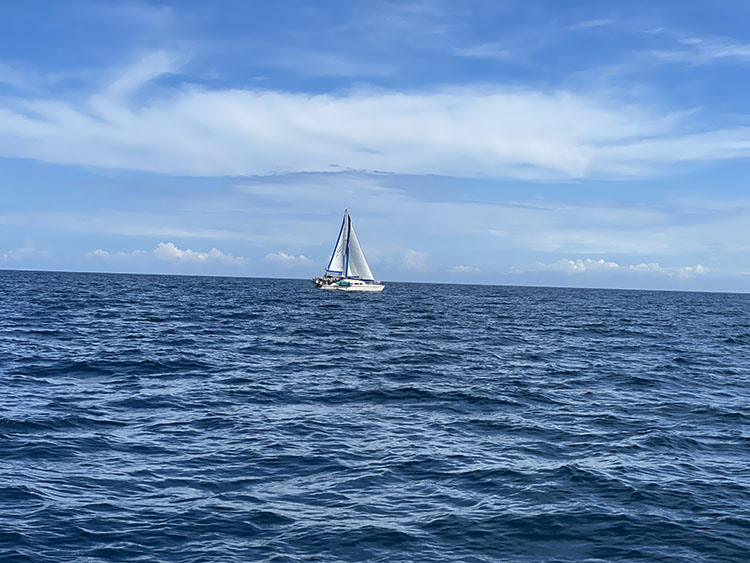
That afternoon before dark we took off for Jamaica. This was to be our longest passage, taking 6-7 days. It was a great afternoon for the spinnaker with the wind on our starboard quarter at about 160º. We were able to attain speeds up to 8 knots while only flying the spinnaker. As night fell, I decided to leave the spinnaker up as the wind was calm. I should have doused the spinnaker when it got dark, but we were making great headway, so we left it up. That was a mistake, as the winds died in the middle of the night, and we were plagued with a beam swell that relentlessly rocked the boat. We were now motor sailing with the spinnaker lashed down to keep it from getting damaged. It wasn’t until the next morning that we were able to douse it and stow it below. Just as we finished stowing the spinnaker we were hit by a squall. It was short-lived, and we spent that day fighting low to moderate winds, going back and forth between motor sailing and sailing depending on the direction and speed of the wind.
We had planned to go east as far as Santa Marta, Colombia, along the Colombian coast, and then turn north to Jamaica, but the seas were getting rough, and the wind was increasing from the east as we moved through the night. Finally, Kyrie turned north ahead of schedule as they couldn’t handle the pounding in their catamaran. We followed a short time later. This was to be our second mistake and it was a big one; not easting far enough to make it to the eastern end of Jamaica.
Catamarans notoriously do not point well to weather, meaning they can’t sail as close to the wind as we can. As time passed over several days, Kyrie slipped farther and farther to the west and clearly couldn’t make it to the east end of Jamaica. They finally decided to go around the west end of Jamaica, with Montego Bay as their destination. They were hoping to only stay there for a short period until the weather allowed them to join us at Port Antonio.
The seas were bad for the next 4 days, not calming down as long as the wind was blowing. According to Predictwind, the winds were supposed to slowly clock around to the east, but they only did for a very short period. The wind continued to blow predominantly from the ENE, preventing us from making much-needed easting to pass around the east end of Jamaica. As Kyrie was sailing farther and farther west, we were also moving a bit too far to the west. During one of the days our autopilot stopped working so we were left to hand steer while motoring. Luckily the wind was blowing well, and when it wasn’t on our nose, we were able to sail and use the Hydrovane to steer the boat, giving us a break from hand steering. Kyrie and I stayed in touch via our Iridium GO and their SSB radio using email so we could update each other as to our conditions and plans.
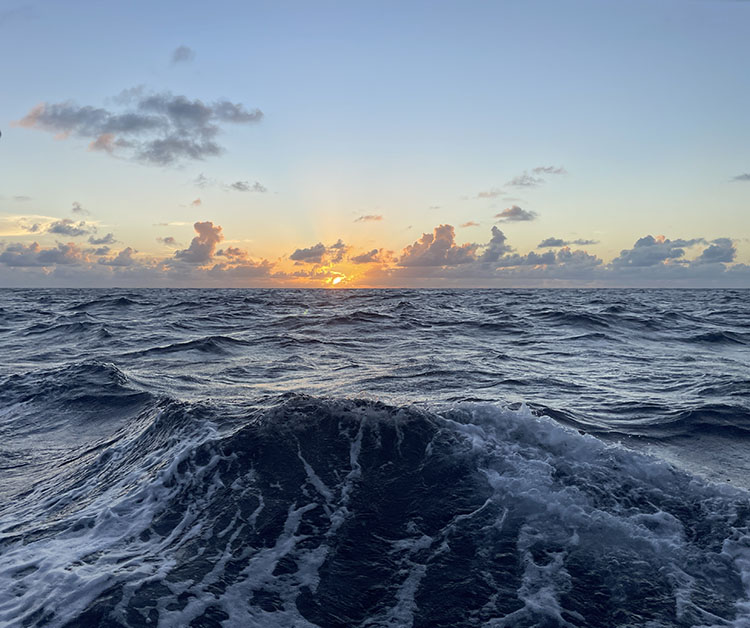
By the 4th day we realized that we would not make the east end of Jamaica, so decided we should follow Kyrie and go with the wind to the west end of Jamaica. That decision had also been prompted by the fact that our fuel problem had reared its ugly head again and the engine wouldn’t run in the choppy seas. It would be necessary to change the fuel filter and I wasn’t about to go below and do that while the seas were tossing the boat around like a cork. I had. Been seasick much of this passage, and a trip below would have been disastrous. And to add to our dilemma, the winds continued to come from a more northerly direction, now almost out of the NE. Without an engine, there was no way to gain any more headway to the east. Turning west was our only option, so we turned and headed west under sail.
During one of my cat naps in the middle of the night, I woke to flapping sails (I always set a 15-minute alarm to wake me so I can look around). The wind, after all this time, decided to die. I mean dead. No wind, period, and without the engine, we were just bobbing on the water. Now that the wind was gone, the seas started to calm down and I was able to go below and change the fuel filter. The engine started right up and with no wind, I made a command decision to turn the boat around and head east. We had only gone west about 5 hours, so had to backtrack that same amount to get to where we had originally turned west.
We continued to alter between sailing and motor sailing as we headed east. The wind was mostly on our nose, or close to it. Along the way, a Jamaican Coast Guard vessel came alongside and asked where we had come from and where we were going. We said Panama and Port Antonio. They thanked us and sped away. We rounded the east end of Jamaica expecting a bit of a breeze to push us the rest of the way west to Port Antonio. No such luck. The wind died and we motored to Port Antonio.
It is now the 16th of November, and without wind, we wouldn’t make the marina before dark. We don’t like entering marinas or anchorages in the dark, but we’ve had to do it a few times, and this was one of them. After looking at the chart we decided to anchor in the East Harbor as it appeared to be an easier route than going through the narrow channel to the marina. After 7 days on the water, we were overjoyed to get a good night’s sleep anchored in a quiet harbor.

In the morning there were two fishermen in a boat close by so we chatted with them for a bit. They told us they were putting out lobster traps. We weighed anchor around 10 am and headed into the Marina careful not to disturb their traps. The Errol Flynn Marina is not what it used to be since COVID. The only amenities are showers, a pool, and laundry. The two restaurants were closed down. Luckily, there were some restaurants, cash machines, grocery stores, and an open-air market all within walking distance.

We settled into our dock routine of fixing things and exploring the area. The first on our list was to address the fuel issue. We have a small gear pump connected to the engine to change the oil. I decided to disconnect it and rig it up to pump out what was in the bottom of the fuel tank. It took a bit of time, but I was able to rig up a suction tube and return line so I could suck fuel from the bottom of the tank and return it to the tank after going through a screen filter. I ran this pump for at least an hour moving the suction tube around the bottom of the tank. I had to clean the screen out 3 times as it got completely clogged with gunk from the bottom of the tank. I put everything back together, returned the pump to its location on the engine, and hoped I had removed enough gunk to eliminate the fuel issue. I would find out later, as we made our way to Florida that the fuel issue had been solved. Even in rough seas, the engine never quit again.

We meet a couple and their two kids who knew their way around the area. They invited us to go provision with them, so we got to know them a bit. We also walked to dinner with them at a restaurant they discovered that was very inexpensive and good, and walked to a jerk chicken take-out place along the shore (a staple of Jamaica). It included what I would call a fried dumpling called a festival. It was doughy and fried but did taste good. I guess this is Jamaica’s answer to French fries.
During our conversations with them we found out they were heading to the Bahamas soon, so discussed buddy boating to Matthew Town on Great Inagua. They were very generous and gave us some books on the Bahamas they no longer needed, as we had not planned to go to the Bahamas and had no books or charts of the area. We pored over the books and started planning our route to Florida through the Bahamas. Not an easy task, due to the shallow waters of the area. We then focused on watching the weather for a good weather window to go through the Windward Passage between Cuba and Haiti. Not an easy task, as this time of year, the wind is coming from the east-northeast and would be on our nose much of the way through the pass. Working with our buddy boat, we arrived at a departure date and made plans to leave in the early morning of November 25, 2022.
Stay tuned, next time, for our trip through the Bahamas to Florida.
 Sailing into our next chapter