The End of a Chapter – Summer 2024

We had been discussing selling Cerca Trova and moving back to land for about six months. I was getting tired of constantly repairing the boat and Lynette’s knees were continuing to bother her more and more. After the long winter trying to get to the Bahamas hampered by either boat repairs or weather issues, we decided it was time for a change.

We had three and a half good years of sailing on two different boats and traveled almost 8,500 nautical miles during that time. We saw some very cool places and met many great people along the way. I wouldn’t give up those years for anything. This sailing adventure was a bucket list item for me, and I was able to check it off my list. Possibly the only regret I have is that we didn’t make it to the East Caribbean on our own sailboat.

With me at almost 72 and Lynette at closing in on 69, I was tired and neither of us had the energy to keep going. Are there other cruisers older than us? Certainly, but most cruisers we met were younger than us and many were way younger. This makes me wish we had cast off years earlier, but that just wasn’t in the cards.
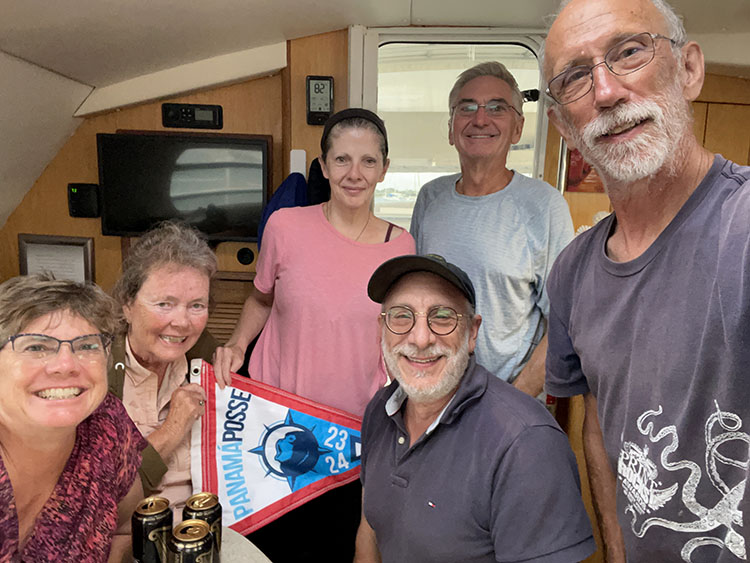
Our San Diego Posse Friends

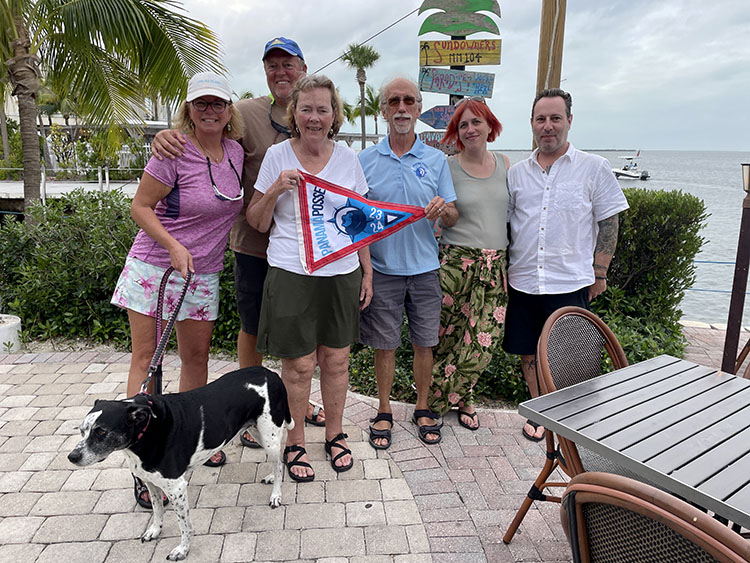
We left off in our last post arriving at Lake Worth, FL, in the evening of May 17, 2024. We spent some time with our friends, Josh and Sheila, who were anchored there and met up with some old friends we had met in San Diego, Dave and Mary on Yo-D-Yo. All six of us had met back in San Diego in 2021 and had stayed in touch. This was the first time we had all been together since 2021 in San Diego. It was a great reunion and hopefully not to be the last.
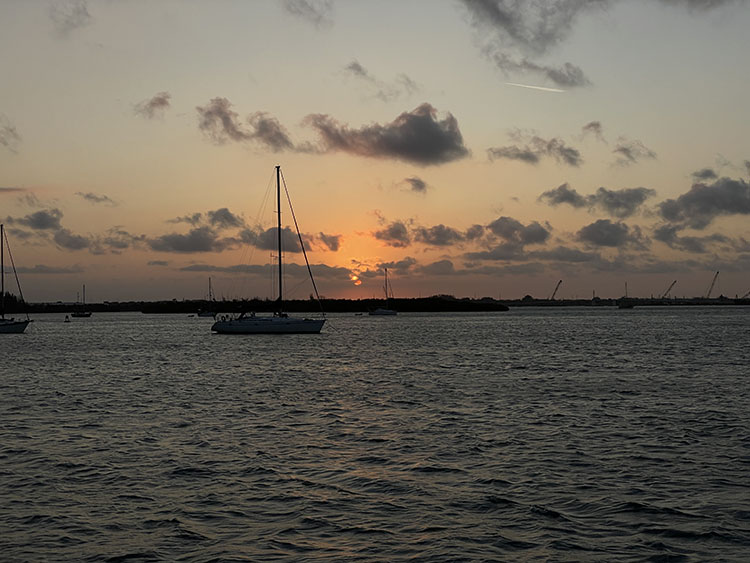
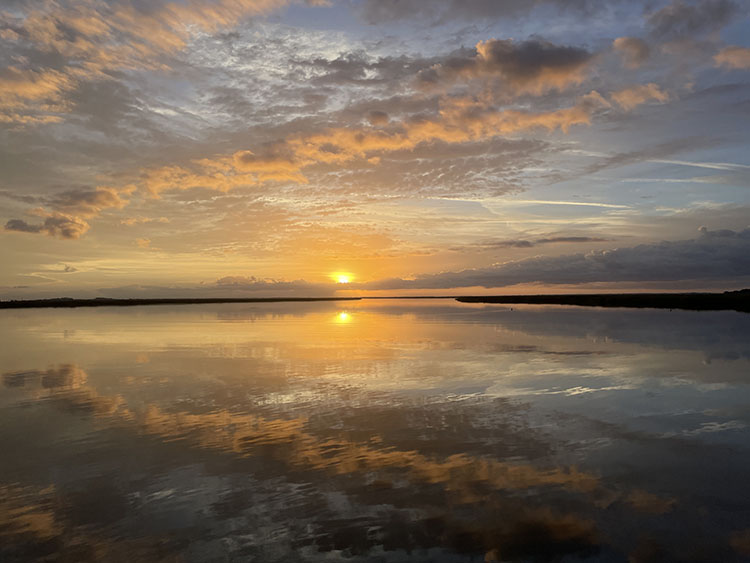
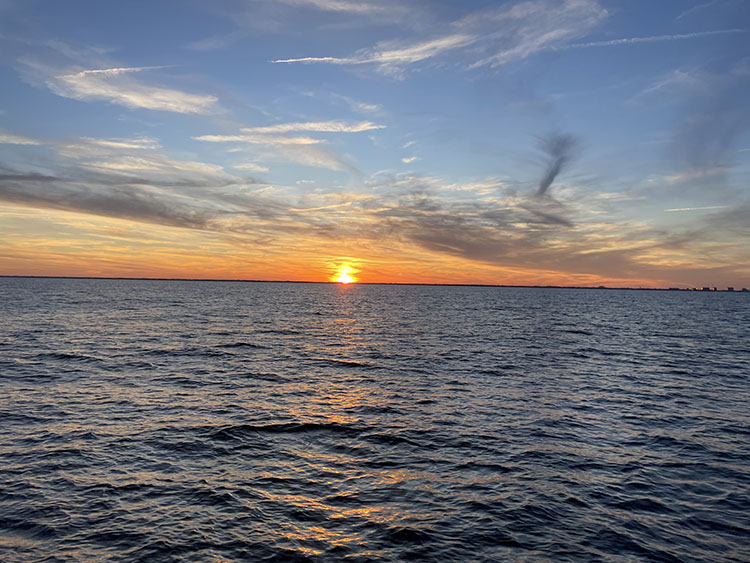
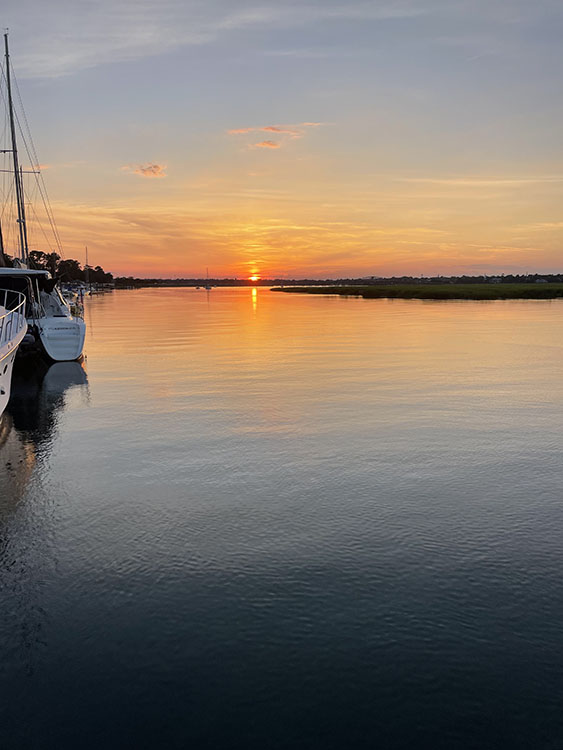
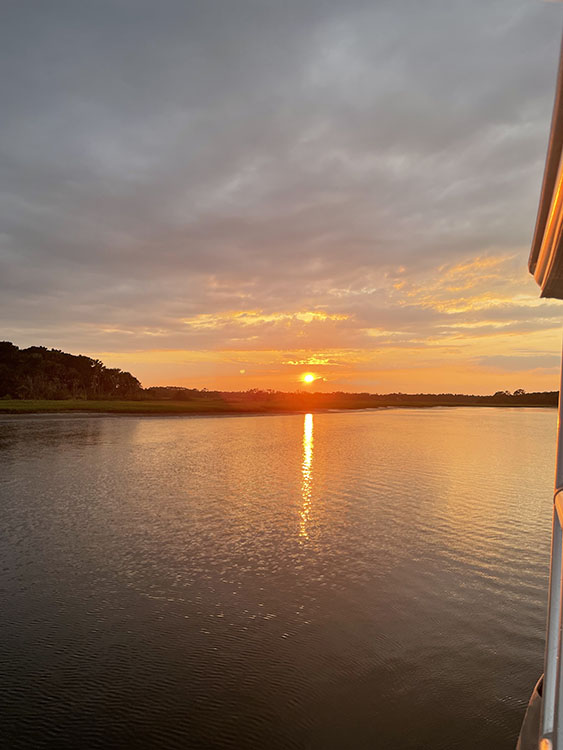
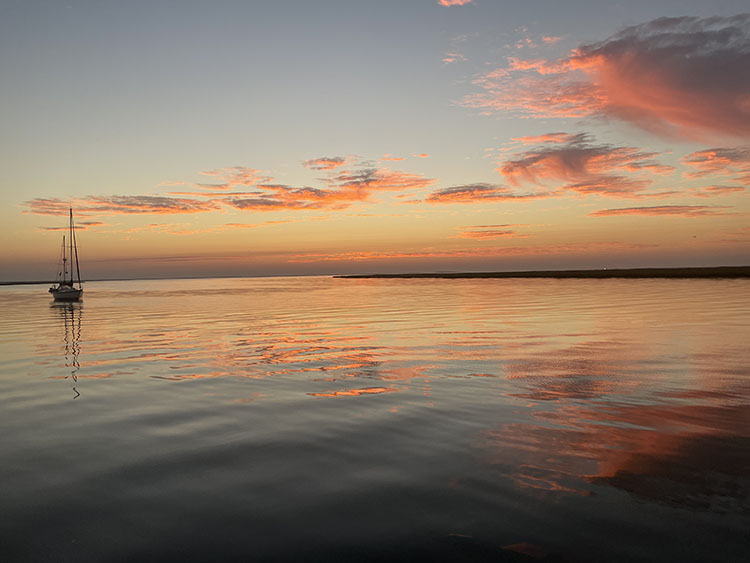
Fort Pierce Anchorage at Sunset

We departed Lake Worth with Yo-D-Yo on May 20st at 7:00 am, heading north. The weather was good, so we opted to go outside instead of up the Intracoastal Waterway (ICW). We motored but tried multiple times to sail with not much luck, as the wind was just too far forward to make any headway. We arrived at Ft Pierce Inlet with the tide coming in, so got a nice push to our anchorage from the current. We made 9 knots speed over ground (SOG), which is fast for Cerca Trova. We anchored on the south side of the channel almost to the ICW at 4:16 pm and then went out to dinner with Yo-D-Yo and another couple they knew.
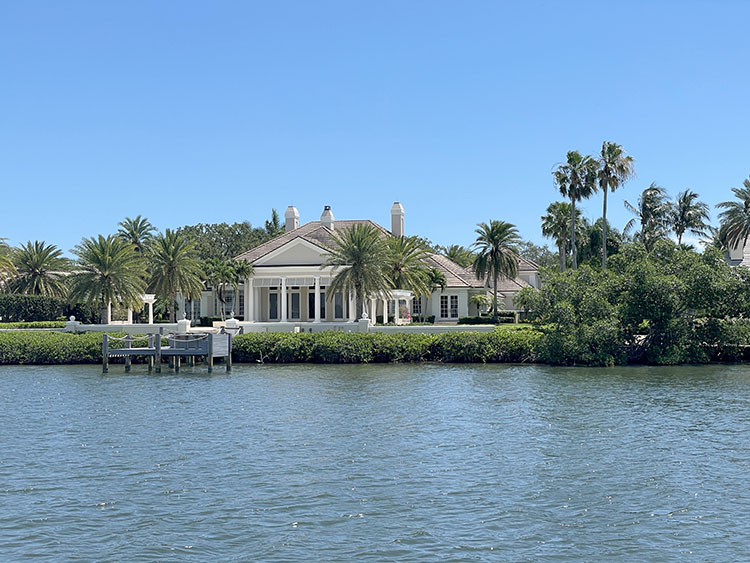
A Huge House Along the ICW

We weighed anchor the next morning at 8:48 am, heading north up the ICW. This was an easy and uneventful passage to our next stop at an anchorage near Paradise Blvd. in Melbourne, FL. We arrived at 5:24 pm and settled in for the night. The day had been sunny and warm, and we were happy to be on track, moving north.
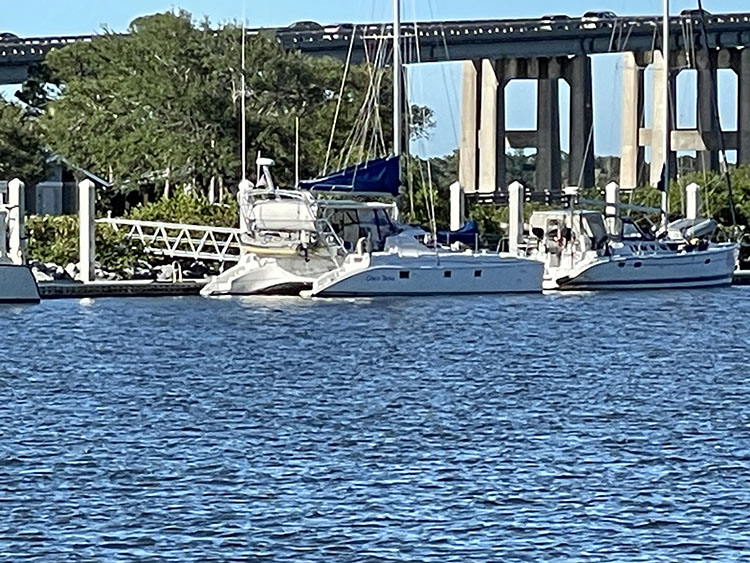
The Free Dock at Cocoa Village

There is a free dock at Cocoa Village, FL, that we planned as a stop. This was a very short 15nm passage, so we leisurely left our anchorage at 10:05 am on May 22nd and motored up the ICW to Cocoa Village. We docked at 1:03 pm after asking another boat on the dock if they would move a bit so we had room to dock.

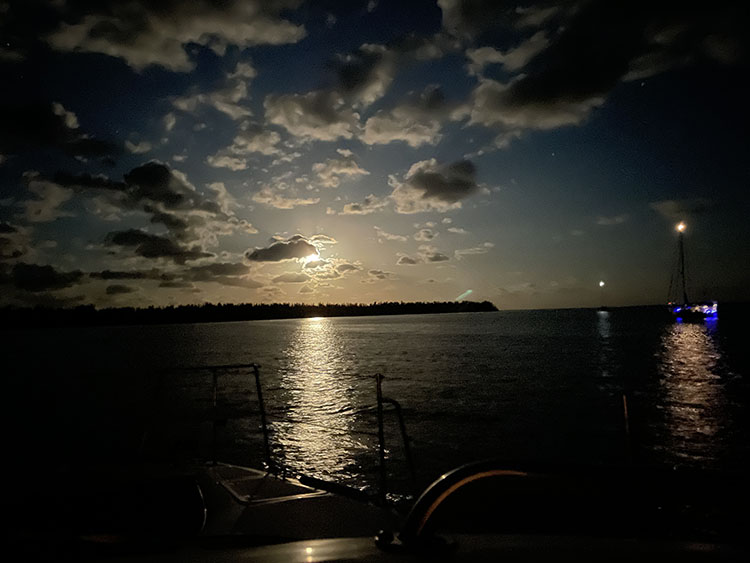
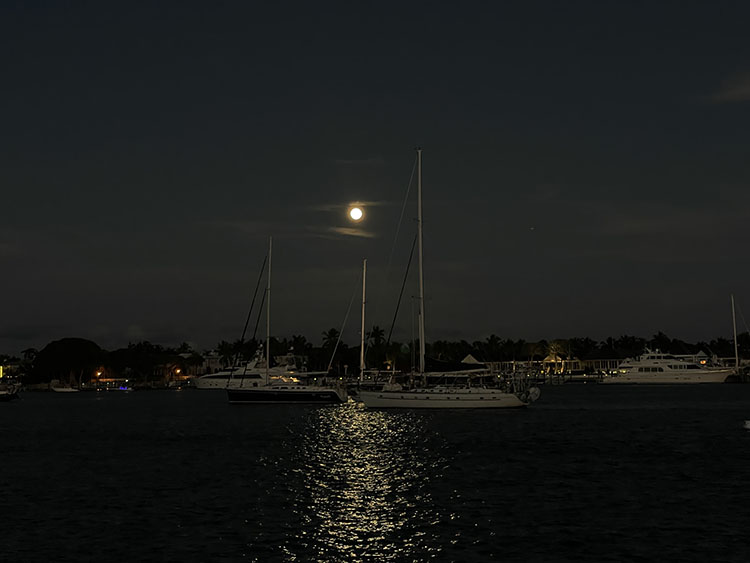
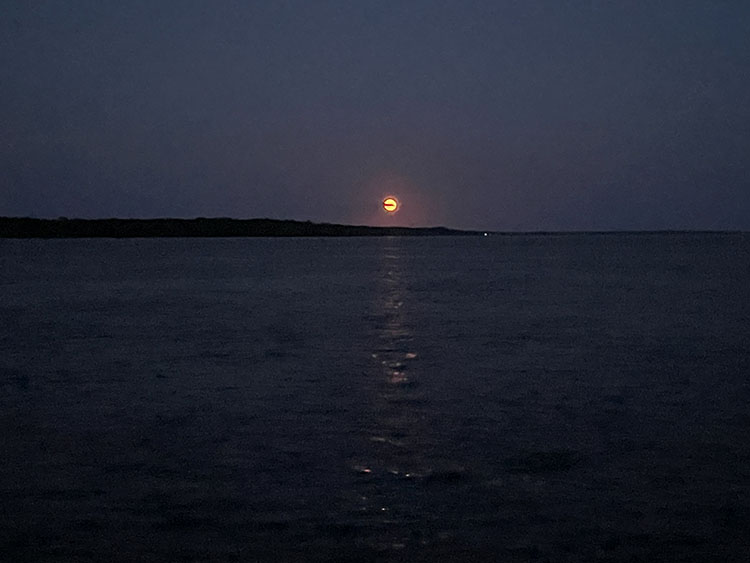
Full Moon at Cocoa Village

Arriving early gave us plenty of time to explore the town of Cocoa Village and get some much-needed walking exercise. Cocoa Village is a quaint town with lots to offer. We explored a great old hardware store and ate ice cream at a cute ice cream parlor. That evening we walked back into town and had a fantastic dinner with the Yo-D-Yo crew, Dave and Mary.

Next stop, Titusville Marina. Titusville Marina had been our first marina upon arriving back in the US on or previous boat, No Regrets, and our third visit there in total. We arrived on May 23rd at 1:07 pm after a short 18nm motor up the ICW. We knew the town well, so walked to dinner with Dave and Mary, and stocked up on groceries. We bid Dave and Mary goodbye after a couple of days as they headed to Brunswick, GA.
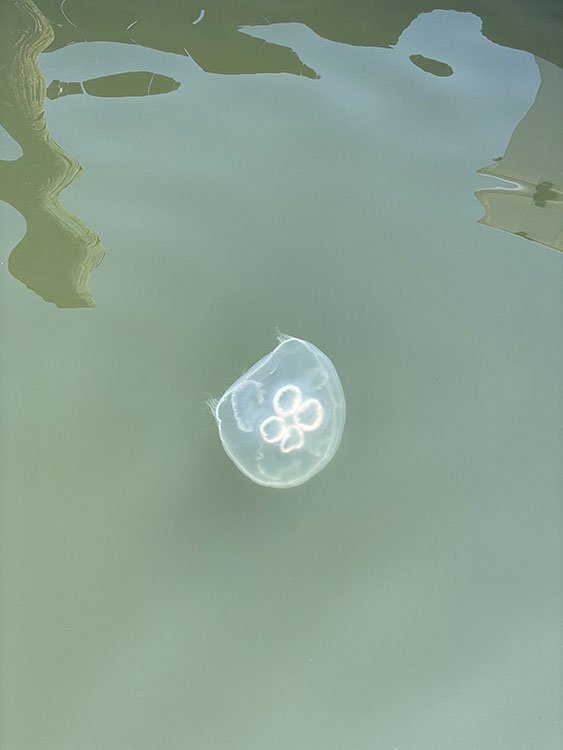
Jelllyfish at Titusville Marina

During our stay in Titusville, we made plans to haul out and have some saildrive work done. Our port saildrive had a loose zinc anode that I had noticed while diving and cleaning the bottom in the Bahamas. I was unable to tighten it then, so figured the only way was to haul the boat out and address it on the hard. We made arrangements at Sea Love Boat Works at Ponce Inlet, FL, to haul out on May 28th, so left Titusville in the morning of May 27th. The passage was 35nm and took us most of the day, arriving around 4:45 pm. The next day at slack tide Cerca Trova was in the sling and on its way out of the water.
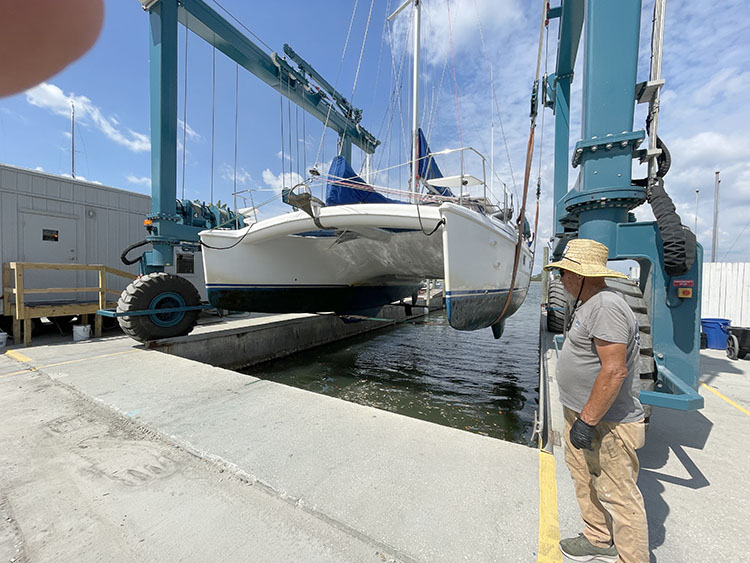
In the Sling

We rented a small AirBnB condo in South Daytona Beach for 9 days while Cerca Trova was in the yard. It was on a bus route that had a stop very close to the boatyard, so I took the bus to and from the boatyard every day to work on the boat. As I was dismantling the zinc anode on the port saildrive, I found that the mounting holes had corroded to the point where they would no longer hold the zinc in place, so I had to order a replacement end cap and wait for it to arrive. In the meantime, I had the yard sand off the copper-based bottom paint from both saildrives and apply a non-copper-based bottom paint. I removed the propellers, sanded them, and applied a prop antifouling paint. Then I tacked polishing and waxing the underside of the bridgedeck and waterline along the hulls. That was a big job, holding the buffer over my head for multiple days. I certainly had a great workout, and probably overdid it.
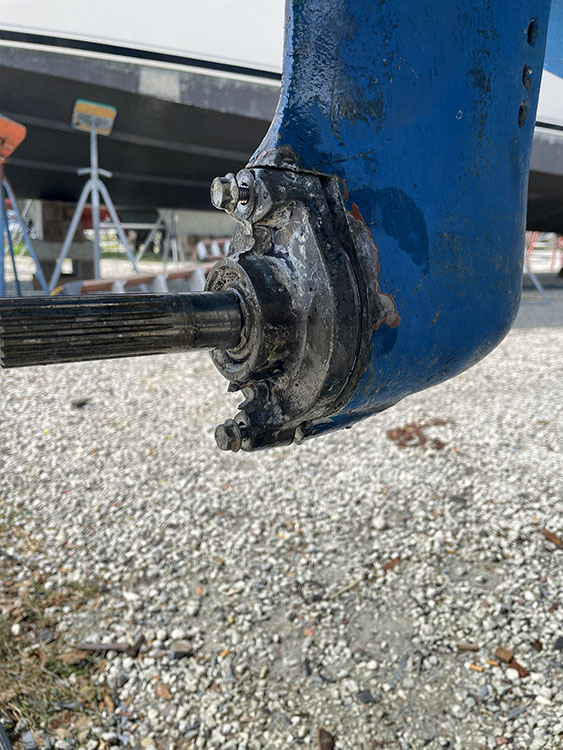
Broken Saildrive End Cap

While we were at the AirBnB, the older couple who owned the condo were very interested in our sailing adventures, so they offered to take us to dinner. We had a wonderful time walking along the beach with them and talking about our sailing adventures. They were very nice, and we enjoyed the short time we spent with them.

Ponce Lighthouse

With the boat work done, we splashed on June 4th, 2024, and tied up to the dock next to the boatyard. We headed north the next morning at 7:00 am along the ICW. I noticed some gray smoke from the port engine and the coolant temperature was a bit high, so kept my eye on it. Always something to cause concern on a boat. The port engine continued to heat up, so we switched to the stbd engine to let it cool down. We arrived at the mooring field in St Augustine at 3:45 pm after an almost uneventful passage of 55nm.
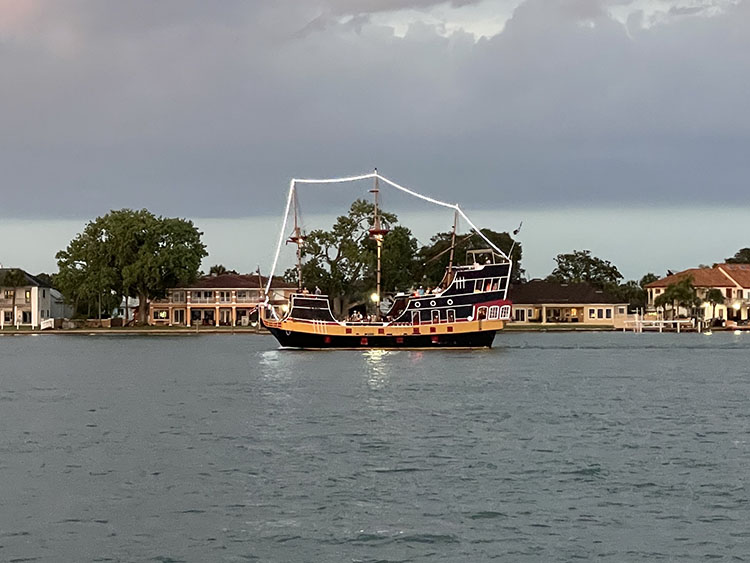
Pirate Ship Cruise in St Augustine

Since the mooring field was very close to the ocean inlet, we had quite a current shift as the tides changed. With the wind blowing in one direction and the current running in the other, the boat was fighting to stay in one place on the mooring ball. Several times the ball was pulled under one hull or the other as the boat shifted to the wind and current. After one night of this, and it was constant, we decided to get a slip at the dock for the remainder of our stay.

Cathedral in St Augustine

St Augustine claims to be the oldest city in the US with fantastic Spanish colonial architecture. We took an Uber into town to see some of the sights the city is famous for. It was good to get out and walk around. We certainly needed the exercise.

The weather was good, so on June 8th, 2024, we decided to do an over night from St Augustine to Lady’s Island Marina in Beaufort, SC. This was an outside passage as the ICW through Georgia is long and winding, and quite frankly, a bit boring. So, to keep us on our toes, we decided on short and quick. Well, not so quick as it was a 162nm passage. We motored the entire way as the wind was on our nose and light, as was often the case.
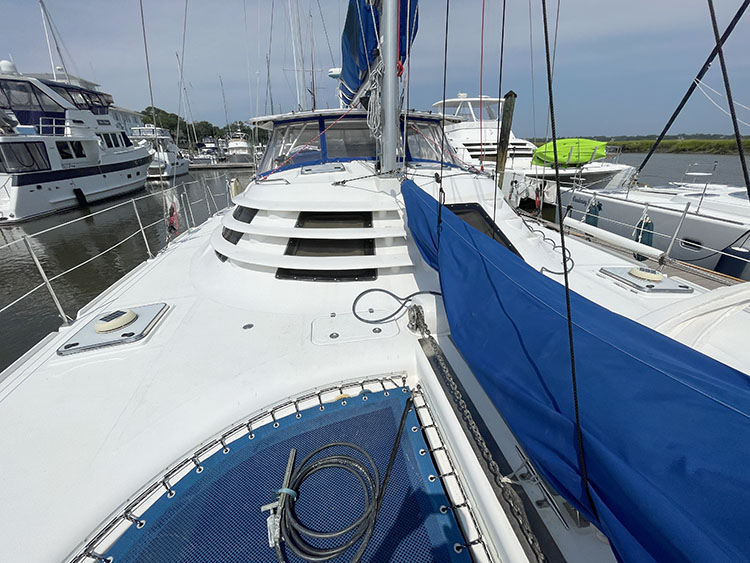
Back at Lady’s Island Marina

We arrived at Lady’s Island Marina on June 9th, 2024, at 3:45 pm, and checked in with the marina. Our tasks now were to prepare Cerca Trova for sale and make plans to find a place to live. This was our last official passage on Cerca Trova. We came full circle as Lady’s Island Marina is where we saw Cerca Trova for the first time back in 2022 while looking for a new sailboat. Sometimes things do go full circle, and this was one of them.

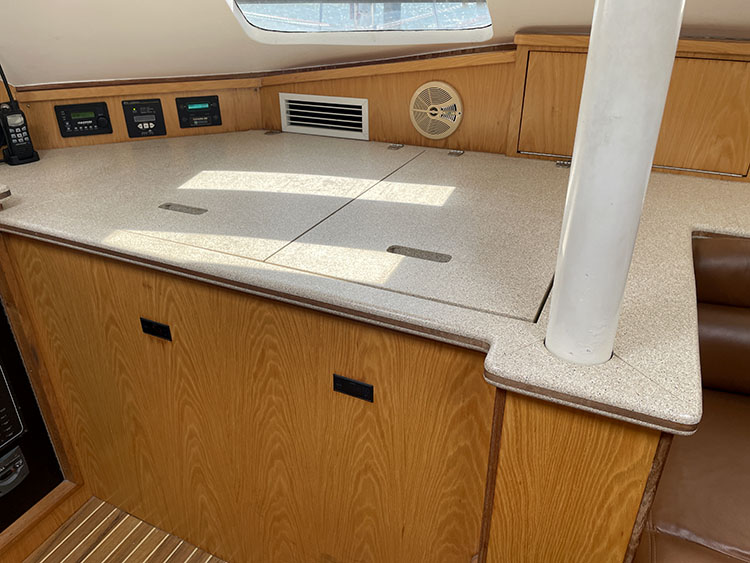
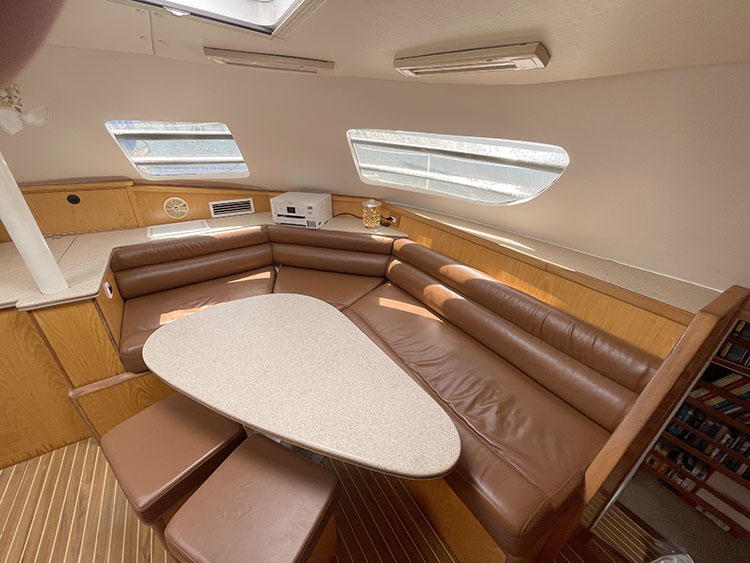
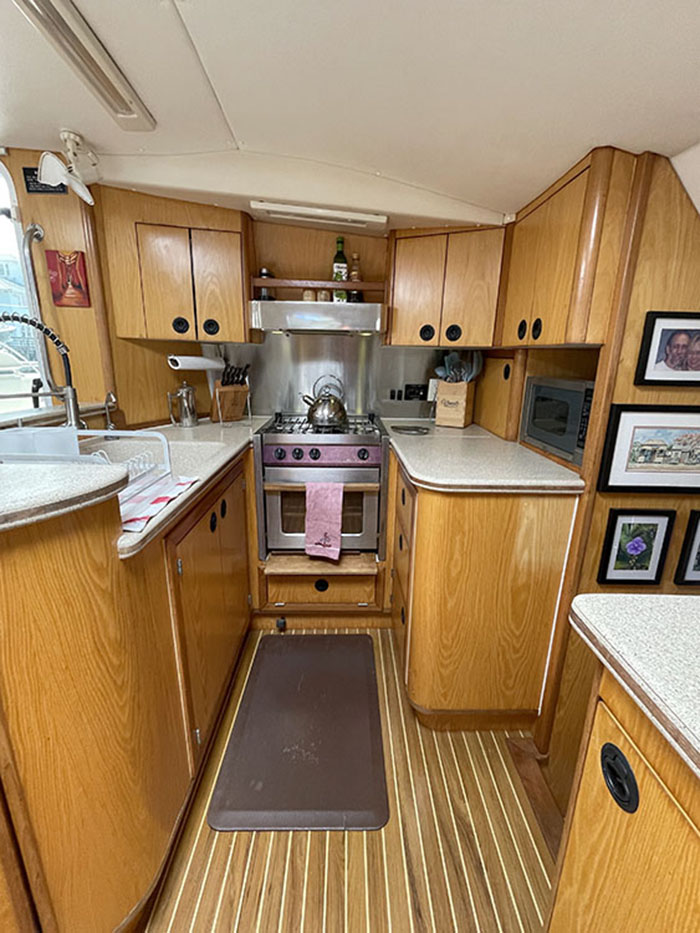
We spent quite a bit of time cleaning Cerca Trova and taking pictures for the boat listing. Once she was listed, we had several showings and then one couple decided they wanted her. I was very grateful she sold quickly and just like that; this chapter was closed.
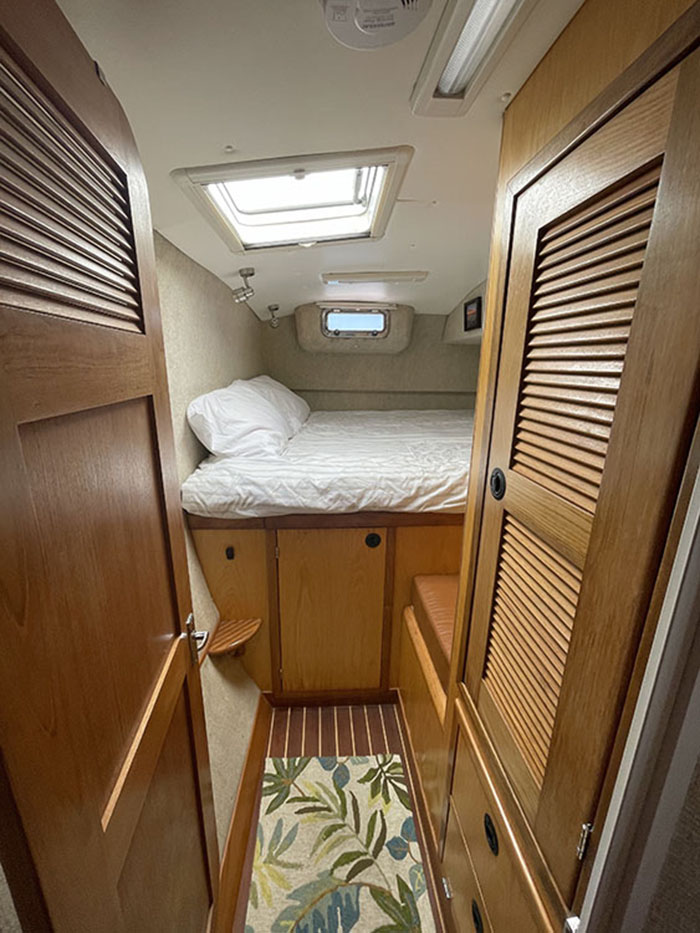
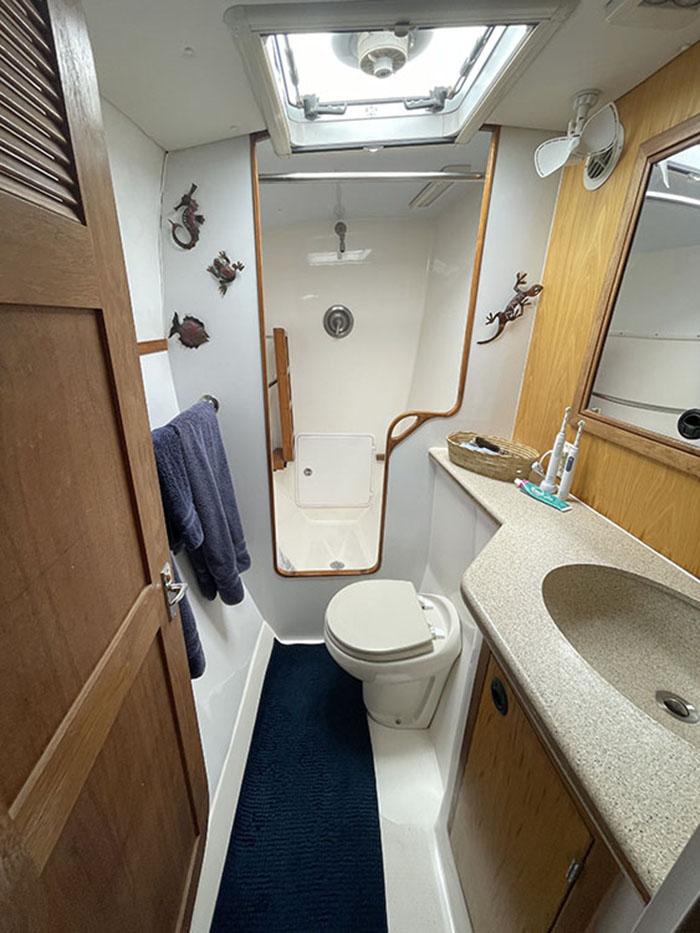
We are now back on land and happily living near Greenville, South Carolina. We found a small house that we are quickly turning into a home. We had no furniture, so that was first on the list, and are now getting landscaping done and planning a summer garden. Welcome to our new next chapter.

The Abacos – Spring 2024

With everything working on Cerca Trova and a good weather window we left West Palm Beach on the evening of Sunday, April 21st, and crossed to West End, Grand Bahama Island. We left at 7:40 pm for the overnight passage of 60nm and arrived 13 hours later at 8:40 am, tired but ready to clear into the Bahamas. I knew that the Gulf Stream would put us North of West End, so we motored SE for about half the passage and then let the Gulf Stream carry us North until we were out of the current and able to head SE to our destination.

Old Bahama Bay Marina

The crossing was mostly uneventful, but a bit lumpy while we were motoring into the Gulf Stream until we turned and let the current carry us North. We motored the entire way as the wind was at an unfavorable angle for sailing (this seems to be the story of our sailing life – wind on the nose).

Another view of Old Bahama Bay Marina

Clearing into the Bahamas was quick and easy. Both Immigration and Customs are in a small building at the marina, so we walked over and went through the process. Once cleared in, we checked into the marina for 2 nights and went for a late breakfast at the restaurant onsite. We were tired from the overnight passage, so we hopped into bed and slept until evening. I fell asleep thinking it was good to be in another country again after being in the US for over a year.

Sunrise leaving West End and heading to Indian Rock Passage

The usual first stop after leaving West End is Great Sale Cay. It’s a 48nm passage and we were doing it with the wind on our nose. Not a strong wind, but the wind direction was forcing us to motor and not sail. We left Old Bahama Bay Marina for Great Sale Cay at 7:00 am on the 24th. The route took us through Indian Rock Passage, a narrow and shallow path. It is not necessarily dangerous in calm weather, but it certainly is shallow. I noted water as shallow as 8′.

Sundowners (Devil’s Gardens) and snacks at Great Sale Cay

We saw few boats and no marine animals along the way. We did have a radio conversation with another sailboat that had just left Great Sale Cay. They mentioned needing to be aware of downed trees in the anchorage from a previous hurricane, so we kept that in mind when we arrived and picked an anchor spot. Luckily, we saw no trees. The anchor was down and set at 3:40 pm. We were ready for sundowners and snacks.

Moonrise at Powell Cay

We used Great Sale Cay as an overnight anchorage and left the next morning around 7:00 am. The next passage was 47nm to Powell Cay and again, into the wind, so we motored the entire distance. Powell Cay was another overnight anchorage for us, so we spent the night and left around 7:00 am the next morning for Manjack Cay North anchorage. Manjack Cay is only 9.6nm from our anchorage at Powell Cay, so we made good time motoring into the wind and dropped our hook at 9:18 am. It was nice to have a short passage for a change. Here’s where the fun begins.

Manta catamaran owners are a very close-knit group of sailors. We have a very active online forum and Facebook group. Many owners have been friends for years and meet in the Bahamas or other locations yearly. Manjack Cay was to be our first encounter with other Manta catamaran owners on this trip. We met Karen and Duane on S/V Sojourn, a 1998 40′ Manta. We had sundowners and snacks on their boat that evening and thoroughly enjoyed our time with them.

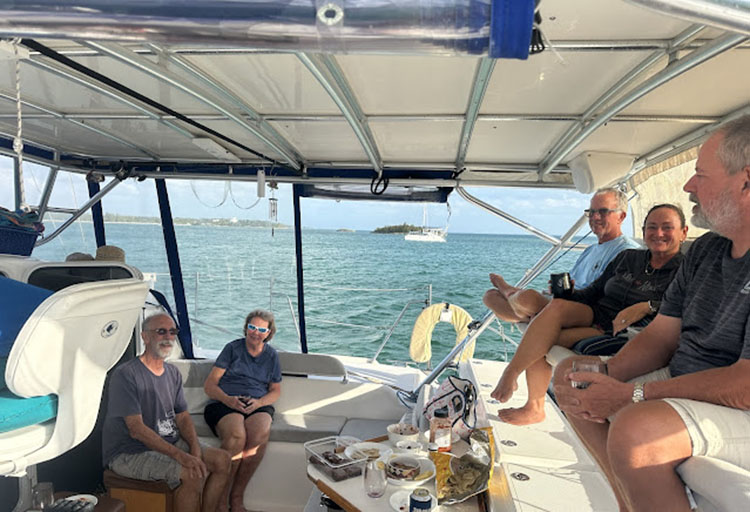
Sundowners & snacks with S/V Sojourn and S/V Skyfall

The next day Jim and Michelle on S/V Skyfall, a 1997 40′ Manta, came into the anchorage. That evening we hosted snacks and sundowners on Cerca Trova and had a great time meeting and talking with them along with Karen and Duane from the previous night. Both couples knew each other quite well, so we were the newcomers and were received with open arms. What fun!

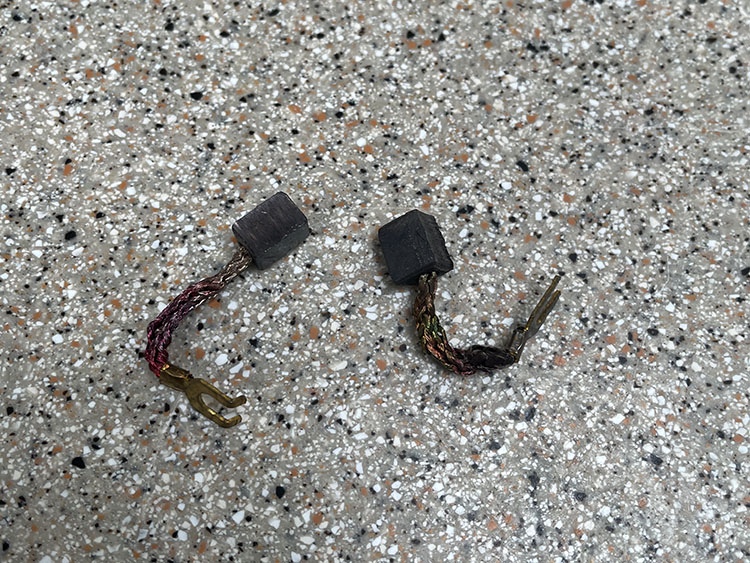
Old worn watermaker pump motor brushes

During this time our watermaker broke down for the 6th time. Ugh! I spent much of the day working on it, with text messages and phone calls to tech support people. The feed pump had quit and upon dismantling it I found that the motor brushes were shot. With luck, I had a spare used pair that were in better shape than the ones in the motor. I replaced them and got the motor working, only to have the control board go out. With help from tech support, we were able to get the watermaker working in a manual mode that served us until we got back to West Palm Beach, where a new control board would be waiting for us. I can’t believe how unreliable our watermaker has been. Not fun!

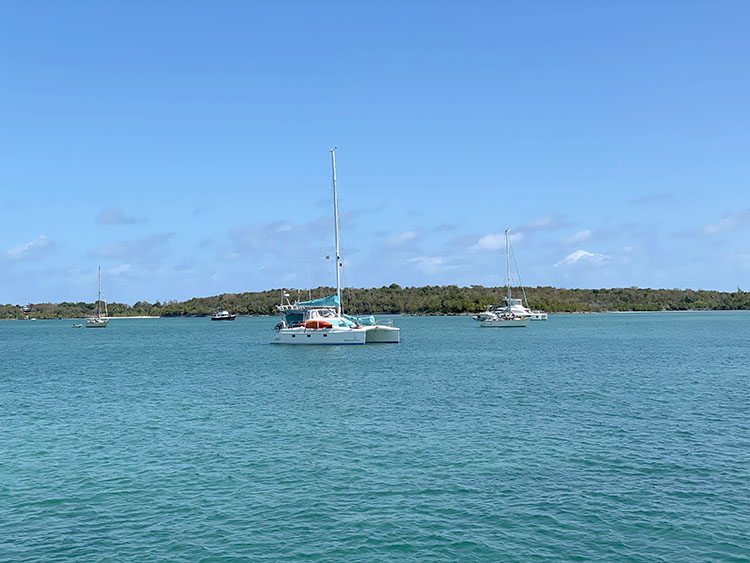
S/V Breathe at our anchorage at Crab Cay

Sojourn and Skyfall were on their way back to the US, so they left the next morning. We knew that Jason and Monica on S/V Breathe, were at the next bay South, so we weighed anchor at 3:00 pm and made the 2nm passage to Crab Cay to get together with them. They are a couple we met several years ago while looking at Manta catamarans and we spent some time with them last year in New Bern, NC. Jason is the admin for the Manta forum and they are great people to have as friends.

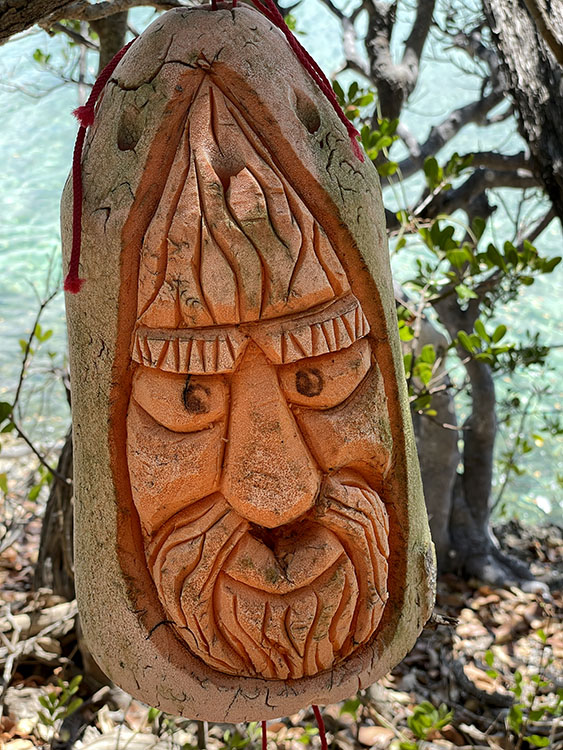
Crab Cay was a delight. The water was clear and there were lots of things to do. I went snorkeling with Jason and Monica and saw many turtles and small sea creatures. There are two wrecks in shallow water in the area and hiking trails. Lynette and I did an art hike through the trees at Manjack Cay that was quite interesting. We stayed at Crab Cay for 4 days and had several get-togethers with the Breathe crew.

We left Crab Cay for New Plymouth on May 3rd at 1:30 pm, a very short 4.6nm motoring passage that took a little over 1 hour. The anchorage was crowded, so we anchored a bit far from shore. Not the best anchorage as it was a bit choppy and every time a power boat went by we got hit by their wake.

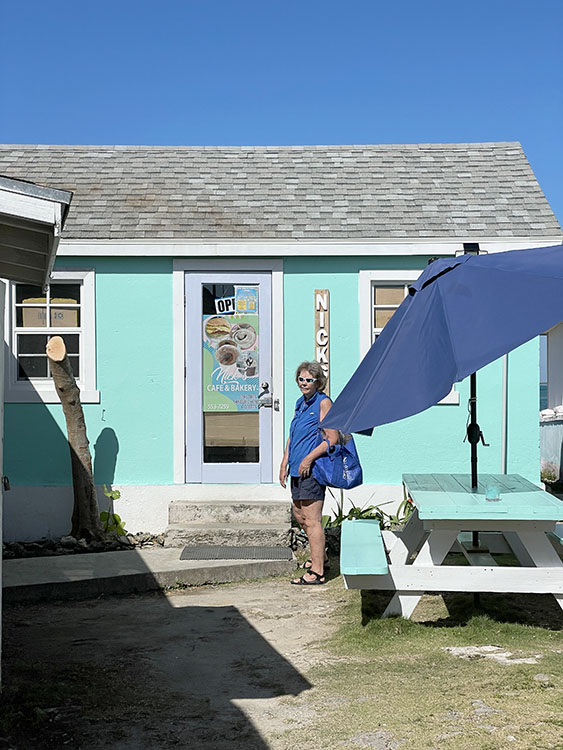
Nick’s Cafe & Bakery, New Plymouth, Green Turtle Cay

We lowered the dinghy and went to shore the next morning to stretch our legs, dump trash, eat breakfast, and buy some provisions at the store. New Plymouth is a quaint little town and the people are very friendly. We sat with a gentleman at the picnic table in front of Nick’s café and chatted for a bit. Good food, great coffee, and an excellent conversation.

Bluff Cay at Bluff Cove anchorage

We were unhappy with our anchorage at New Plymouth so I did a little research and found a very protected cove just a bit north of our anchorage, so we decided to move there for a less bumpy ride at anchor. We raised the anchor at 3:18 pm on May 4th and went the 1.7nm to Bluff Cove. The entrance was very shallow with water that was less than 7′. Bluff Cove is a very small anchorage with houses surrounding it. There were no other boats anchored there, and we only got disturbed when a few boats came into the cove causing a little wake. Otherwise, the water was very calm. We didn’t get off the boat, but we did stay for 3 days, enjoying the solitude and calm water.
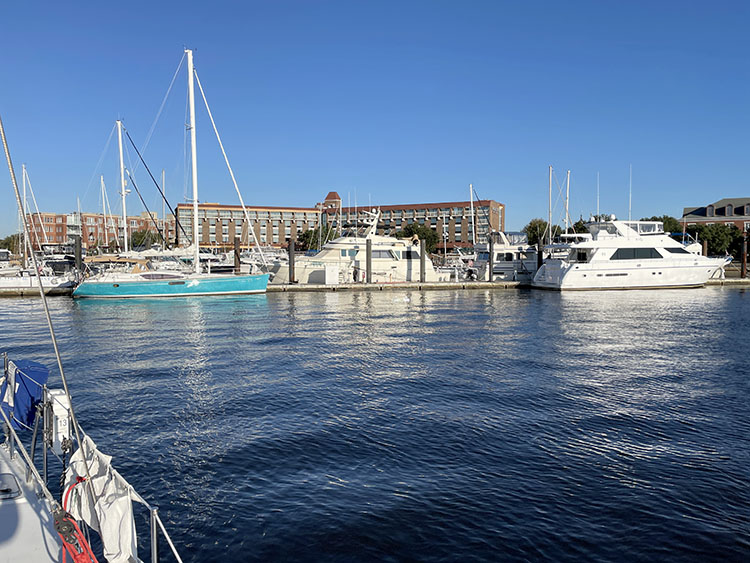
We were told Hope Town was a popular and very cute little town to spend time in and we shouldn’t miss visiting there. We planned Hope Town to be our turn-around point for this trip. Our anchor was up at 6:20 am on May 7th for the 28.4nm passage to Hope Town.

The passage to Hope Town took us through Whale Cay Cut, which separates the northern area of the Abacos from the southern area. It can be a dangerous passage when the weather is bad. Cruising guides mention the danger of attempting Whale Cay Cut in bad weather. Knowing this, we planned our passage on a calm day, and the planning paid off. The weather and seas were mild, and we had no issues.
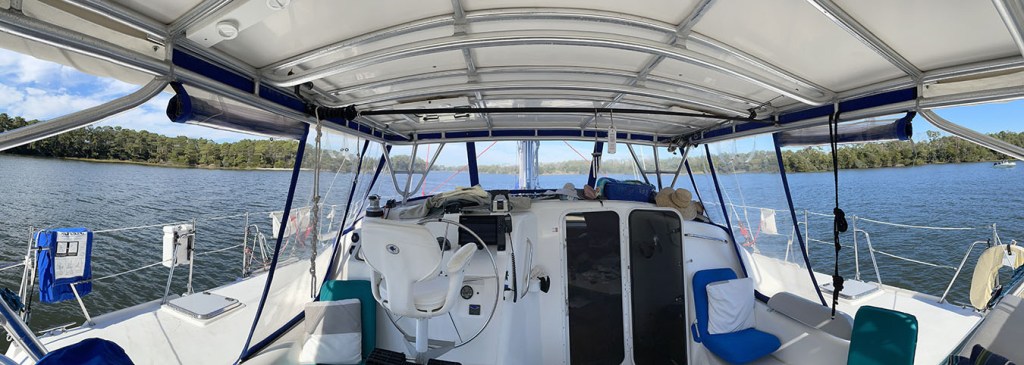
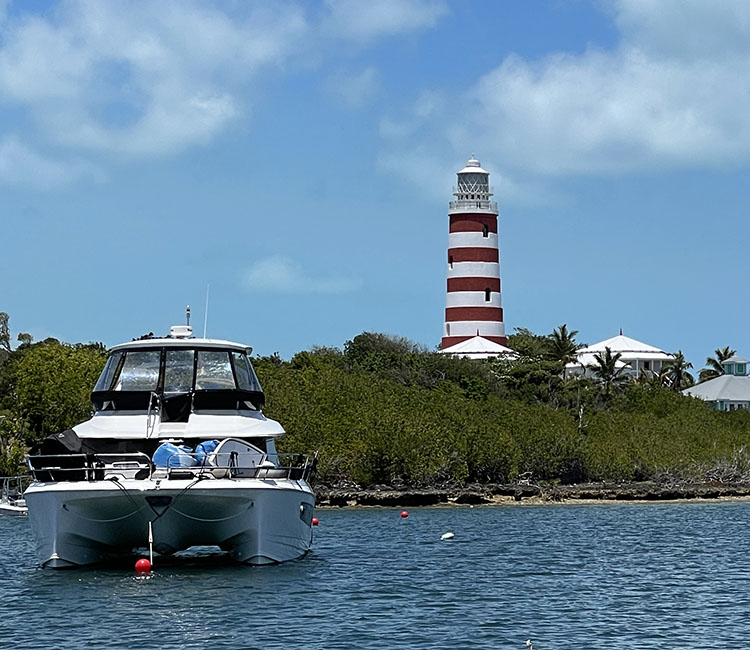
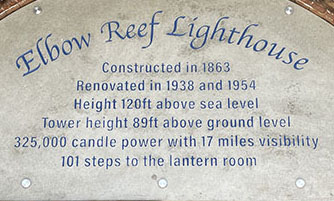
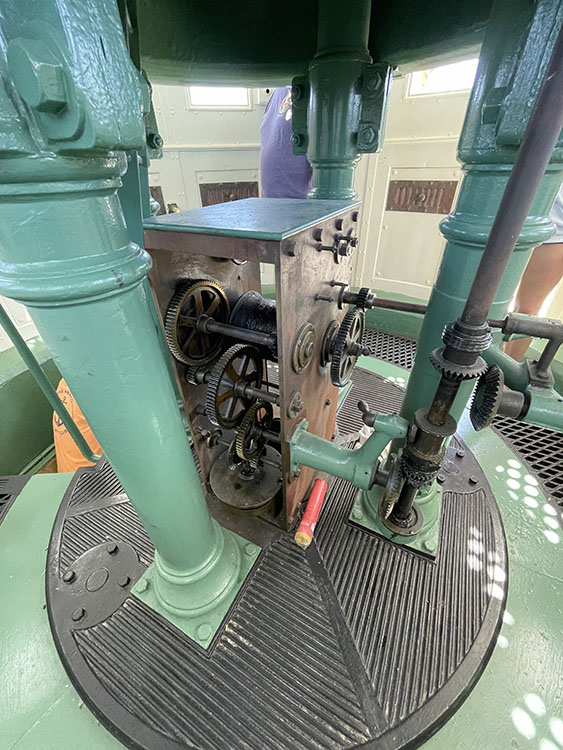
Hope Town has a picturesque red and white striped Lighthouse, British Imperial commissioned in 1863. It is one of the last kerosene-fueled lighthouses in the world and is only one of three manually operated lighthouses in operation. It uses a weight mechanism that must be hand cranked every several hours to maintain the sequence of five white flashes every 15 seconds. The lighthouse is free to visit and climb the 101 steps to the top. I counted them, just to make sure there were 101.

There is no anchoring in the harbor, so we took a mooring ball for $30 per night. The first night we went to dinner and walked through the town. The next day we met up with another Manta family Skye and Alan on S/V Tangent and climbed to the top of the lighthouse. What a view. We stayed only two nights on the mooring ball and then moved to an anchorage outside the harbor for two more nights, as we didn’t want to keep paying for the mooring ball.

Taking a walk through Hope Town
View from the top of the lighthouse

Lynette and I dinghied to town to have lunch and to get some essentials. Key lime pie is essential! The next day I went in with Skye, Alan, and their kids to play Mexican dominos at the pool. I had never played before, so they were patient with me and taught me the rules. I was bad at it and lost miserably, but we had a blast. The pool was a nice refreshing break from dominos.

A blow was expected in the evening of May 11th, so we departed the anchorage at 9:20 am for more protected water before it started blowing hard. Our destination was Marsh Harbour, an 8.1nm passage that took 2 hours. Marsh Harbour is the largest town in the Abacos, and from the anchorage looked to be on the industrial side. We didn’t go ashore, so can’t say what the town was like, but it certainly didn’t have the charm of Hope Town from the water.
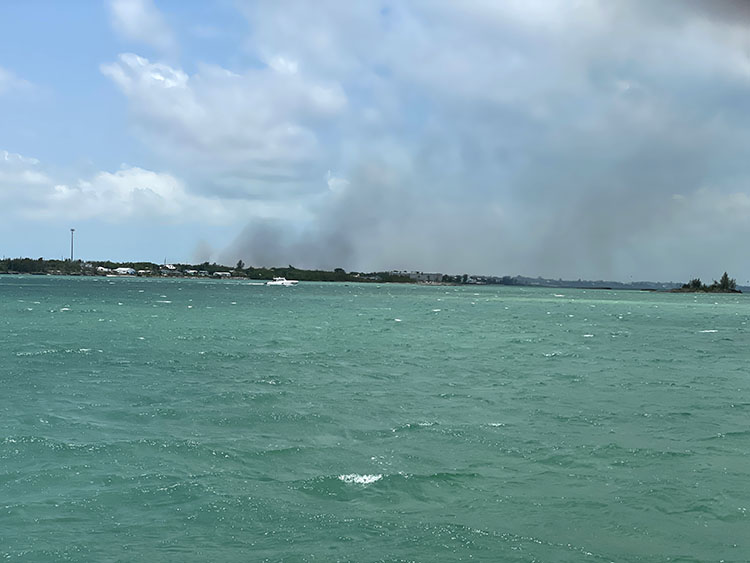
Smoke near Marsh Harbour anchorage

There had been fires burning in the hills of Marsh Harbour for days. When we first anchored the smoke wasn’t blowing in our direction, but when the wind shifted, we were right in its path. It was so smokey we couldn’t stay in Marsh Harbour more than one night, so we left the next morning at 11:00 am, got fuel, and started our journey back to Florida.

We retraced our steps through Whale Cay Cut back to Crab Cay, a distance of 26nm. Whale Cay Cut was, again, uneventful as we made our way north. We arrived back at Crab Cay at 3:40 pm. For some reason, the anchor would not grab. We made several attempts at the same location we had anchored before with no luck and then moved twice toward Manjack Cay until we got it to hold. This was the first experience we had where the anchor just wouldn’t bite.

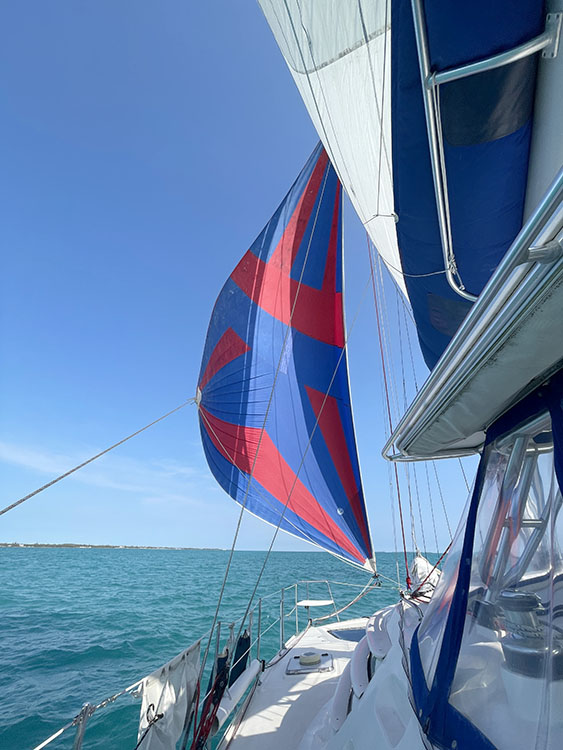
Flying the spinnaker

The next morning the wind was finally blowing in a direction we could sail. All this time we had been motoring due to the unfavorable wind direction, and finally a break from burning diesel. I prepped the sails to be raised and we weighed anchor for Great Sail Cay at 7:50 am. This was a fantastic sailing day! We started with the spinnaker and were making good time until the wind changed to dead downwind. We doused the spinnaker and raised the jib to run wing on wing with preventers on both the jib and main. We tucked a reef in the main as the wind increased to about 20 knots, and then finally lowered the sails to come into the anchorage at Great Sale Cay. This passage was 55.6nm and we did it in a little over 10 hours. What a fun day!

The anchorage became a bit bumpy in the night as the wind direction changed. By morning we were no longer protected from the wind and decided at a moment’s notice to move to a more protected spot. The previous owner of Cerca Trova had texted me about an abandoned development on the south side of West End, on Grand Bahama Island. After reading comments about this anchorage in the Navionics app, we decided to make that our next destination. The place is called Ginn Sur Mer. It has several dredged canals and an excellent entrance channel.

So, with that destination in mind, we left Great Sale Cay at 9:20 am with 4 other boats and sailed for a good couple of hours before the wind had reached an angle close to the bow. We motor sailed to Indian Rock Passage before we struck the sails and motored the rest of the way to Ginn Sur Mer, a total of 50nm, which we did in a little over 8 and a half hours.

When we got to Indian Rock Passage the wind was blowing over 20 knots and the waves had built to 3-4 feet. It was a sporty ride through the cut and even worse once we got through the cut. We had been running in relatively protected water in the shallows north of Grand Bahama Island, and now we were experiencing the full force of the wind over the Atlantic Ocean, with nothing protecting us from the wind. We were in 4′ to 6′ seas hitting us on the beam, so not comfortable.

Ginn Sur Mer anchorage

We made the turn into the Ginn Sur Mer channel, and the water instantly became calm. What a welcome change. There were three other boats in the anchorage with room for 3 to 4 more. The water was very calm considering the 20-knot wind. We were very happy to have decided to leave Great Sale Cay and come here. Sometimes spur-of-the-moment decisions can be the best decisions. It was 6:00 pm when we anchored. It was calm inside the anchorage, and we were tired and hungry.

Early the next morning we received a call on the radio from one of the other boats that had traveled with us from Great Sale Cay. They were not having a good time where they chose to anchor and wanted to know how it was where we were and if there was room for 3 more boats. I told them there was room and that it was very calm where we were. They immediately weighed anchor and headed over.

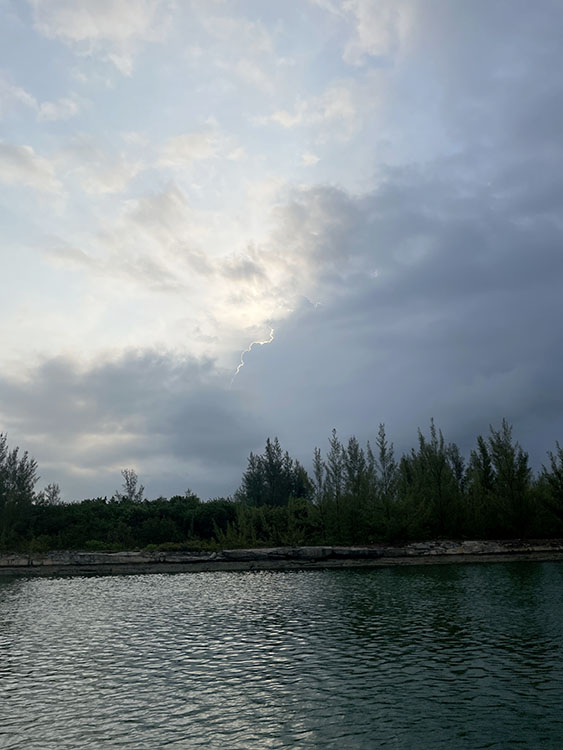
Silver lining after the storm

We had a huge lightning storm the second night. Quite the light show. If it’s one thing that scares me on a sailboat, it’s lightning. You can’t run from it, and you never know where and when it will strike. Strong winds accompanied the storm front that caused us and several other boats to drag anchors. Another boat came in that had been hit by the lightning. They lost all their electronics and wanted to get to Florida to have repairs done. Several of the boats, including us, told them that we would be going over in a pack after the storms and he could just follow us over (he made it safely to West Palm Beach).

Two boats left the evening of the 16th and 5 of us left the next morning around 7:00 am for West Palm Beach, FL. The waves were still up when we left the safety of the channel, but they quieted down as the morning progressed. The wind was light and on our nose, so we motored the 10.8 hours to West Palm Beach. It was a great day to cross the Gulf Stream, but it would have been better if the wind had not been on our nose. We motored a bit south of our destination to take into consideration that the Gulf Stream would carry us north. We arrived at West Palm Beach and anchored in our usual West Palm Beach spot at 5:30 pm on the evening of the 17th. Our trip to the Abacos was over.

Trying to get to the Bahamas – Late Winter 2024

Seized generator head

My daughter and her husband had just left to fly back to Portland, OR, after a week of sailing and exploring the upper Keys in Florida at the end of January 2024. We were charging batteries and making water the next day, waiting for a weather window to take us to the Bahamas when the generator just quit. Yep, out of the blue, it shut down like I had pressed the stop button, or it had run out of fuel. We weren’t out of fuel because the generator shares the same fuel tank our main engines use, and it was at least half full. After checking that the engine was getting fuel, I tried to start the engine and it wouldn’t start. I went to the genset locker to take a closer look while Lynette pressed the start button in the saloon. The starter was slowly cranking the engine, but the belt was slipping on the generator head. Sure enough, the generator head was seized up. It wouldn’t turn. I took the belt off and the engine started right up (thankful for that).

Leaving Miami
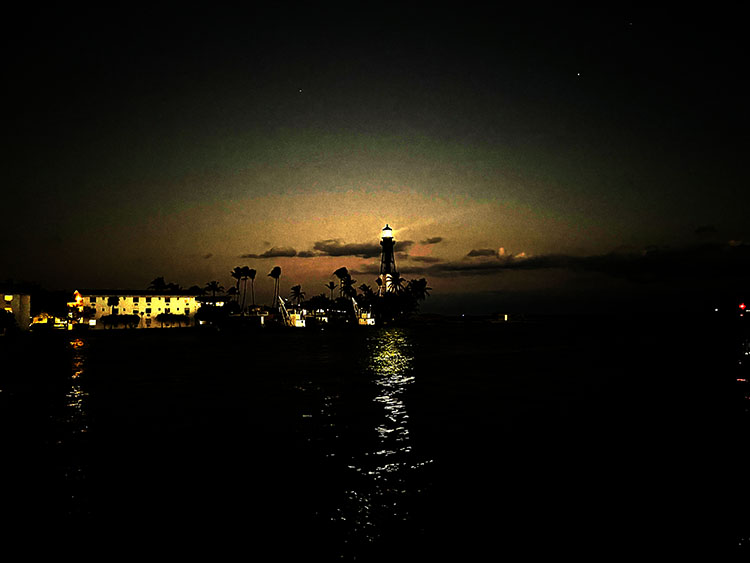
Hillsboro Inlet Lighthouse

We spent the next few hours mulling over what our options were. We certainly didn’t want to cross over to the Bahamas without a generator, so we were either going to stay at Dinner Key or head back up to West Palm Beach to be next to our friends. We decided to go back up to West Palm Beach, as our friends live on a trawler with a crane and large upper deck; a great place to work on the genset while it is out of the boat. We can also have packages sent to their work for the parts we needed.

An unexpected visitor in the sky

We made the trip back to West Palm Beach in two day-sail passages, stopping at Hillsboro Inlet as we had done the last time we headed north from Miami. We motored up as the wind was not favorable for sailing and had a very uneventful passage.

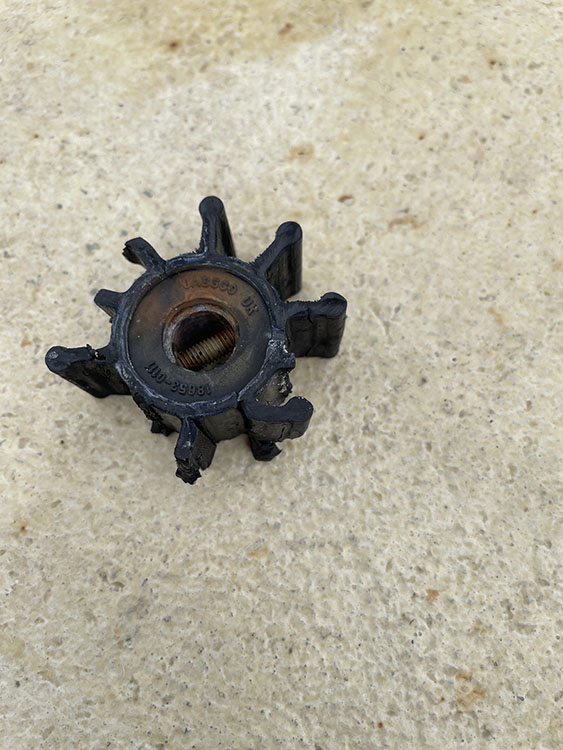
Time to replace the raw water impeller

Once anchored in West Palm Beach, I proceeded to prep the genset for removal and investigated our options for repairing the genset. In a conversation with NextGen, the manufacturer, I learned that the generator head on our genset was no longer made, and they had a replacement generator head from another manufacturer with a complete retrofit kit for the installation. It was not inexpensive at $2700 plus shipping. As I saw it, we had three options:

1. Repair the existing generator head
2. Find a new or used exact replacement generator head
3. Order the replacement generator head kit from NextGen

NextGen had given us a contact in Ft Lauderdale, FL, to get the generator head repaired. They said it would cost between $200 and $300 to replace the bearings, but they suspected the windings needed to be redone, and that would cost at least $1200.

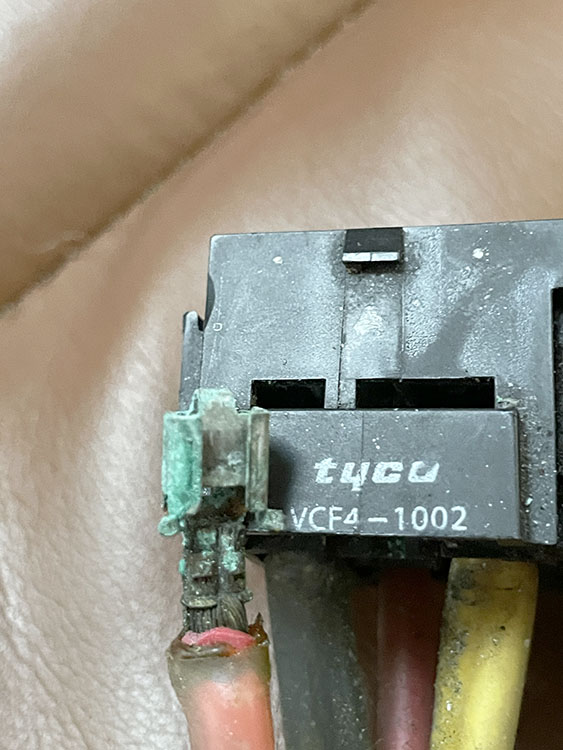
Corroded wiring

I found a brand-new exact replacement generator head on eBay for $750 plus shipping. You would think this was the best and most cost-effective option, but the genset had other issues. Being in a damp saltwater environment the aluminum mounting rails had completely disintegrated, leaving the genset not attached to the boat. These mounting rails were no longer made, but slightly different ones came in the kit for the replacement generator head. They were different because the new generator head was a different size than the old one. We were also encouraged by NextGen to purchase the new generator replacement kit, as the new generator head was a much better product than the older model that it replaces. They even said that they wished they had started using this new head when they started building generators. It was that much better.

Corroded mounting rails

I felt the only sensible option was to go for the replacement generator kit, so I ordered it and other parts from NextGen. I also decided to repaint the genset and replace all the hoses and wiring harness while the genset was out of the boat. The motor mounts were shot, so I added new ones to the NextGen order.

On Thursday, February 8th, with the help of another couple, four of us pulled the genset out of Cerca Trova and placed it on the top deck of our friend’s trawler. The clock was ticking, and I was hopeful to get it reinstalled later in the month. Of course, there were parts delays, but that gave me time to clean the engine and paint it. Plus, I was able to clean up the generator locker and put two coats of Gluvit, a waterproof epoxy coating, on the locker floor.

Genset out of the boat

While the engine was out, I completely rebuilt the heat exchanger using Barnacle Buster to clean the coolant side of the cooling system and the heat exchanger element. It all went back together nice and clean with new coolant, new hoses, a new raw water impeller, a new thermostat, and a new exhaust elbow.

New generator head

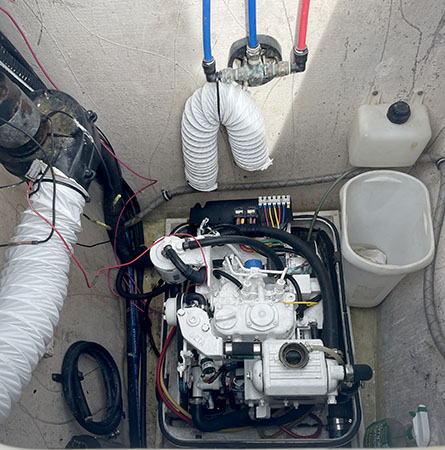
I picked up the generator head kit on February 19th, and I busied myself painting those parts in preparation for assembly. Once everything was painted, I bolted the new generator head on the engine and the genset was ready to install. Three weeks after I pulled the genset out of Cerca Trova it was back in, but there was still quite a bit of work to do before we could start it up. I had the electrical harness to finish building, the electrical connection to the boat, and the plumbing to hook up. Once that was done, I was ready to test the genset. Unfortunately, when I tried to start the genset, nothing happened. A little investigating led me to the start wire from the control panel didn’t have any electricity going through it. I had to tear out the cabinetry in the head to get to the wiring and replace the start wire. Once that was replaced, the genset started right up and we were back in business.

Installing the rebuilt genset

Of course, during this project our watermaker stopped working again for the 4th time since we’ve owned Cerca Trova, so we are now waiting on parts and for the high-pressure Clark Pump to be rebuilt by a watermaker company in Ft Lauderdale. I’m beginning to wonder if we will every make it to the Bahamas this season. Between bad weather and breakdowns, we’ve been in South Florida since the end of December 2023. It’s now late March 2024. Hopefully, our next article will be from the Bahamas. Fingers crossed.

Heading South – Winter 2023/24

Leaving New Bern Grand Marina

We left New Bern on November 2, 2023, with Savannah, GA as our next destination. Savannah wasn’t our original plan though. We had planned to stop at Lady’s Island Marina, where we had stayed on our way north, but they didn’t have any space for us in late November. After much research, I was able to book a slip at Bull River Marina near Savannah, cementing our plans that Savannah was where we would stop for a couple of weeks. This change was good, as neither of us had ever been to Savannah.

View from our swing seat

Lynette’s daughter was coming to visit us for five days, arriving on November 25th, so we took our time slowly working our way to Savannah. With a lot of time on our hands, we kept our passages very short going down the ICW. We anchored in new places we hadn’t anchored on the way north, for the change of scenery.

Sunrise at Alwendaw Creek anchorage

Our only incident during our trek to Savannah was in Myrtle Beach where we got hung up on a rock and couldn’t get off. I called TowBoatUS to pull us off the rock. I’m glad we have full towing service with BoatUS. It made the process quite simple. They were in the area on their way to another incident, so they did a quick detour to pull us off the rock. It took all of 10 minutes and there was no damage we could detect, a bonus.

Arrival at St John’s Yacht Harbor

Our first marina stop was in Charleston, SC at St John’s Yacht Harbor for two nights. We arrived in the afternoon of the 9th and settled in for the evening. The marina had a courtesy car we could use for 2 hours, so we took advantage of the car and went to lunch and grocery shopping. We fueled up on the morning of the 11th and headed for our next anchorage.

We now had way too much time to kill between the 11th and the 20th with only 132nm to go, so we stopped and anchored every 10-15nm along the way. It was nice to not be on a fast schedule to anywhere for a change. We relaxed and meandered down the ICW at a very leisurely pace, weighing anchor late in the mornings and anchoring mid-afternoon each day.

Thanksgiving Dinner at Bull River Marina

Of course, the passage didn’t go without incident. Our port engine started overheating, so I spent some time troubleshooting the issue. It appeared that the thermostat was sticking closed and not allowing the engine to cool, even though I had recently tested the thermostat in a pan of hot water on the stove. Normally we alternate engines to maintain consistent hours on them. Due to the overheating problem on the port engine, we went the rest of the way to Savannah only using the starboard engine for power. As soon as I figured out it was the thermostat, I placed an order, and a new thermostat was waiting for us at Bull River Marina. I installed it after we arrived on the 20th and ran some tests to be sure the new thermostat solved the overheating issue. The port engine was back in business.

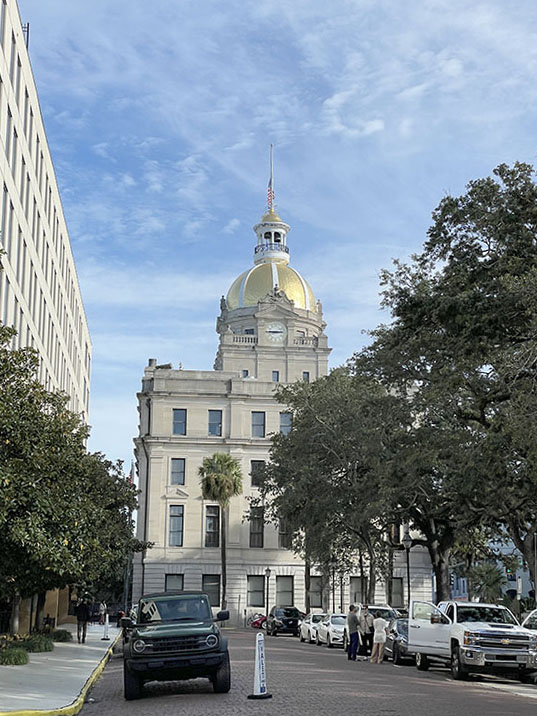
Savannah City Hall
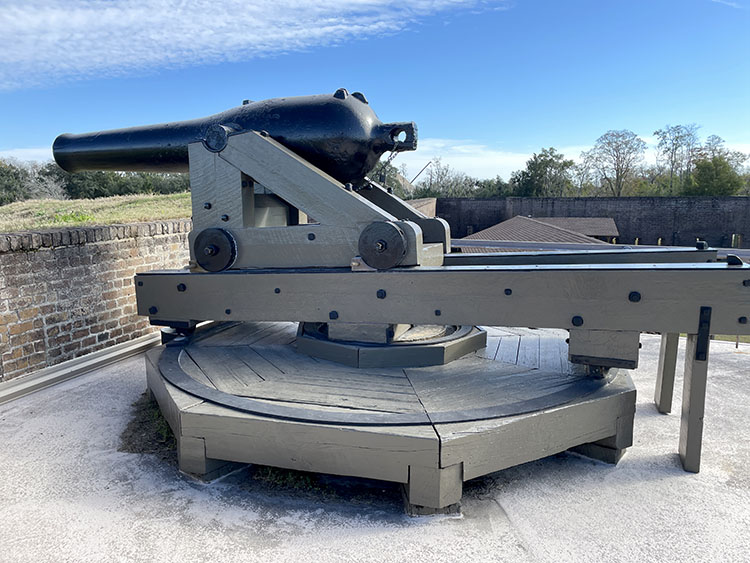
Canon at Old Fort Jackson

Lynette’s daughter rented a car, so we were mobile while she was visiting. We went grocery shopping, out for meals, and explored Savannah. We walked around downtown Savannah, found a famous ice cream parlor (Leopold’s), and watched two canons being fired at Old Fort Jackson. I also needed to get one of our alternators rebuilt and buy a new TV, so we accomplished those as well. It was a fun visit and I felt like we got to explore Savannah a bit.

Spanish Moss on trees at Forsyth Park

We left Savannah on the morning of December 1st and decided to take the outside route along the coast as the weather was favorable and we didn’t want to meander through the Georgia ICW. Much of the ICW through Georgia winds through barren marshlands, a bit on the boring side. Once back inside following the ICW, after a night’s rest at Dog Hammock, we kept hitting fog. It would lift from time to time and then get thick again. On our second day out of Savannah, the fog was very thick. This was a bit unnerving as we couldn’t see more than a boat length ahead, so we slowed down to improve our reaction time if something did appear out of the fog in our way. Many boats were trying to get into the marina in Brunswick, GA. I assume to get out of the fog. We could hear them all hailing the marina on the radio, but we kept going in the fog to our next anchorage at Terrapin Cove. It was just a wide spot in the ICW, but a nice place to drop the hook for the night. The next morning it was beautiful and sunny, but as the day went on, the fog rolled in again.

Us at Bull River Marina

I have stayed in contact with the new owner of No Regrets, our previous sailboat. We chat from time to time and during a recent chat, I mentioned we would be coming through the Jacksonville area on the ICW. He had hired someone to add air conditioners and a diesel generator to No Regrets, now renamed Sweet Caroline, and they botched up the job. I offered to talk to a surveyor and troubleshoot some of what had been messed up while we were in the area.

Sunrise leaving Bull River Marina
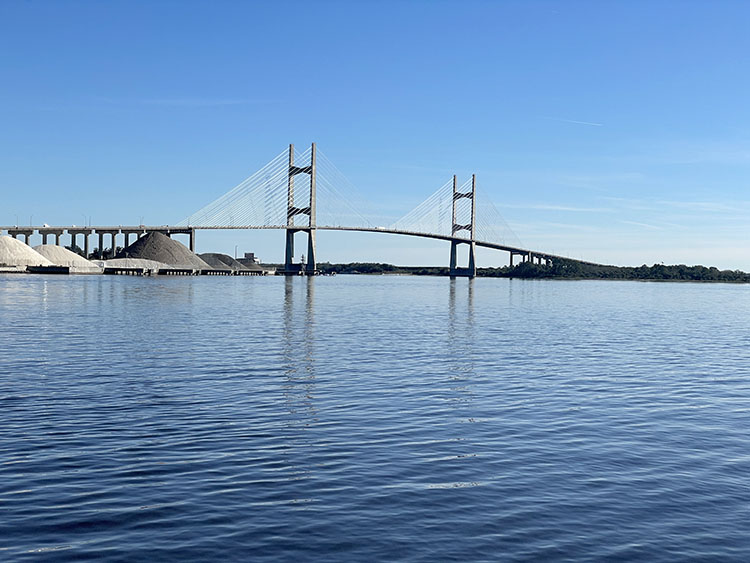
Dames Point Bridge in Jacksonville

We entered Jacksonville on the 4th of December. I had no idea it was about 5 hours west of the ICW, which is a long way when you are going only 5 knots against the current. Sadler Point Marina has a very shallow slip they rarely rent out as it is only about 4′ deep at low tide. We tied up there with no problem and stayed for 3 days. I helped the owner with some wiring issues and talked with the surveyor about the systems on the boat so he could write up a scathing document about how unprofessional the upgrades had been. Many things were not to ABYC specs and when we started one air conditioner unit and the generator a lot of raw cooling water was leaking into the boat. It was a very sad sight to see the boat I had spent so many years putting my all into, just get ruined in such a short time. Lynette wouldn’t even go to the boat, as she didn’t want to see the damage. When we bought No Regrets, we had a similar experience with promises made and damages done and not fixed at our first boatyard in Oregon. Unfortunately, his was much more extensive. Live and learn.

Sunset the first night out on the way to West Palm Beach

The weather looked reasonable for a passage outside to Lake Worth Inlet at West Palm Beach, FL, so we left Sadler Point Marina for West Palm Beach mid-morning on December 7th. This was a 48-hour passage of 261nm, our first 2-day passage on Cerca Trova. We motored the whole way as most of the time the wind was on our nose. The seas were reasonable for about ¾ of the trip, but the last 12 hours were brutal. Catamarans don’t have a pleasant motion in seas forward of the beam, and this was one of those times. The seas weren’t huge, but the ride was rough and uncomfortable. We made it to Lake Worth and anchored mid-morning on the 9th, near our friends’ boat and almost in the same spot we anchored on the way north.

Full moon at our Lake Worth anchorage

When we anchored in Lake Worth, we got hit by front after front with sustained winds in the 30-knot range and gusts up to 50 knots. Lake Worth is not a protected anchorage. It’s a wide area in the ICW in the West Palm Beach area, and when the winds pick up from the north or south, there is a lot of fetch. Add 3′ tides to this and you can wind up with whitecaps in the anchorage. Very unpleasant. During this time our outboard motor decided to stop running and then our watermaker stopped working. We were fortunate that our friends were close by. They took us to shore for groceries and we were able to get packages delivered to his work.

This was when Lynette decided she was done with the sailing life. It had been building for a time, with the lightning near hit, the tropical storm hit, and all the repairs. We were both discouraged with the money going out for repairs and the time I was taking doing those repairs. It seemed like all I had been doing was fixing things that broke on Cerca Trova, and as I was losing confidence in the boat, that lack of confidence was affecting Lynette.

Watermaker feed pump head

The watermaker issue appeared to be several things breaking at the same time. The feed pump was making an awful sound, so we decided to replace the head of the pump. We were also getting an error message that we weren’t getting any water flow, so I needed to replace the flow meter that counts the gallons of water produced. When I opened the electrical panel on the watermaker I found several wires that were burnt, so I made up some new wires with crimp connectors to replace the burned ones. I was able to buy a new feed pump head and I had all the other parts needed for the watermaker. After two days, the watermaker was making water again.

I spent quite a bit of time diagnosing the outboard problem, with some help from the diver who cleaned our bottom. I had suspected the issue was fuel, but after rebuilding the carburetor the engine still wouldn’t run. Not even a cough. I turned my attention to the issue being an electrical problem. That didn’t pan out, so I replaced the gas with fresh gas with no luck. I then purchased a new carburetor and finally, the engine started running. I’m not sure why cleaning the carburetor and replacing parts with a rebuild kit didn’t work, but it didn’t. After 4 weeks at anchor in Lake Worth, we finally had no more urgent issues.

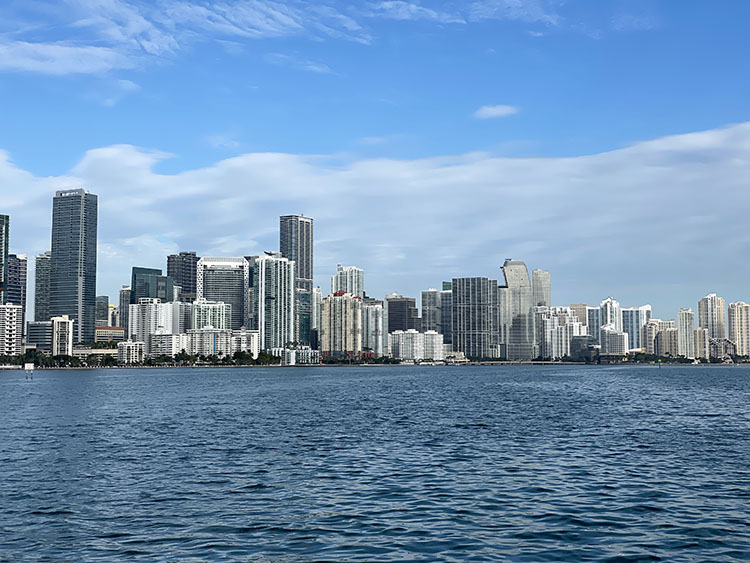
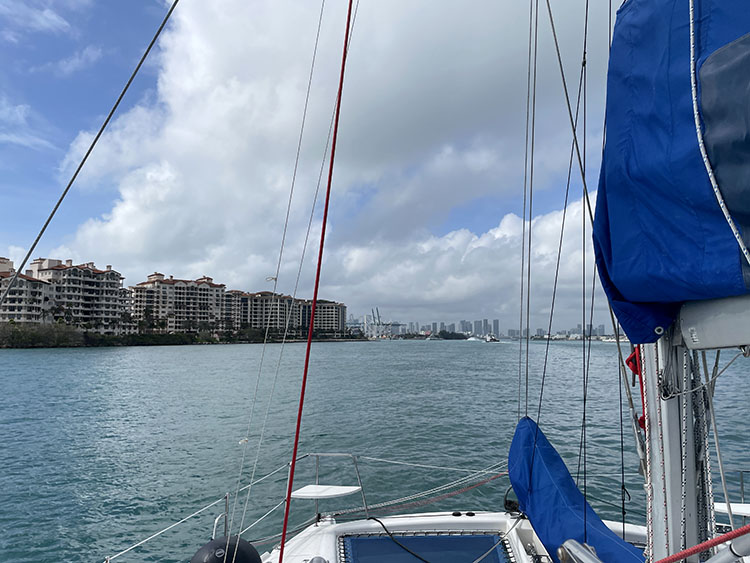
Miami off in the distance

We left Lake Worth on January 17th in the morning for Coconut Grove, FL, a suburb just south of Miami. This was a 2-day passage with one stop in Ft Lauderdale to anchor overnight. We arrived at Dinner Key Marina on the afternoon of the 18th. No slips or mooring balls were available, so we found a spot to anchor. I went exploring in the dinghy to find the dinghy dock, as my daughter and her husband were coming on the 20th for a week, and I needed a place to pick them up. I found the dinghy dock near the park, so we were all set for the 20th.

My daughter and her husband enjoying the sail to the Keys

We originally planned to meet my daughter and her husband in Puerto Rico and take them to the Virgin Islands for a week. With all the problems we were having with Cerca Trova, I didn’t have confidence in her to make it to Puerto Rico without something major breaking down, so we decided to have them fly to the Bahamas instead. That also didn’t pan out as there were no timely weather windows to cross the Gulf Stream for the Bahamas. The final decision was to have them fly to Miami and we would sail to the northeastern Florida Keys. They say cruising plans are made in the sand at low tide. That couldn’t be a truer statement.

Enjoying time with a fellow Panama Posse boat, Queso Grande, at Key Largo

We had a wonderful time with my daughter and her husband. The weather wasn’t that good, but we did get some good sailing in while they were aboard. Plus, there were no major breakdowns while they were here. We made it as far as Key Largo with a couple of anchorages along the way. We didn’t find any clear water, so we didn’t do any snorkeling. They were disappointed in that, but we did go out for dinner a couple of times and played cards in the evenings. They left on the 27th and we started to prepare the boat and get provisions for the next weather window to cross over to the Bahamas.

Next up, unexpected breakdowns take us back to Lake Worth for repairs.

New Bern, NC – Summer/Fall 2023

New Bern, NC is a great little town with a very nice marina right downtown within easy walking distance of many shops and restaurants. On Saturdays, there is a small farmers market that mostly has crafts, but there are some stalls with fruits and vegetables. We planned to spend about a month doing repairs and then head to the Chesapeake Bay. We had committed to working the Annapolis Boat Show Panama Posse booth in October, so we figured it would be nice to explore the ICW and Chesapeake Bay on the way to Annapolis, MD.

Walking to dinner on our first day in New Bern, NC

I received a text message from some Panama Posse friends we had met in San Diego. They were visiting friends in New Bern, NC and wanted to get together while they were in town. After a couple of tries, our schedules finally matched up for the 24th of August and we met them for lunch and a tour of our new boat. It was fun catching up on the adventures we all were having living and cruising on our boats.

Our first sunrise at New Bern Grand Marina

It was a month of visits, as Lynette’s sister and brother-in-law came to visit us on the 29th of August. They drove down from Grand Island, NY, and stayed in an Airbnb as she gets seasick easily. They came to the boat for about 1 hour just to get a tour and that was enough for her. They were here when Hurricane Idalia came close to the North Carolina coast, so they got to witness plenty of rain and some flooding. We enjoyed driving around the area with them in their car as our only transportation had been Uber, which we only used to go grocery shopping. It was a great visit, but way too short as they left on the 31st.

New refrigerator organizers

Meanwhile, between visits from family and friends, I attacked the project list with zest. The list was as long as the Beaufort, SC one and included some critical fixes like getting the generator working again and replacing the rotting port shower ceiling. I had also done some research on refrigerator organizers and installed two that have kept the refrigerator more organized. Chest refrigerators aren’t that easy to keep organized. Everything seems to be on top of what you are looking for.

Tropical Storm Ophelia

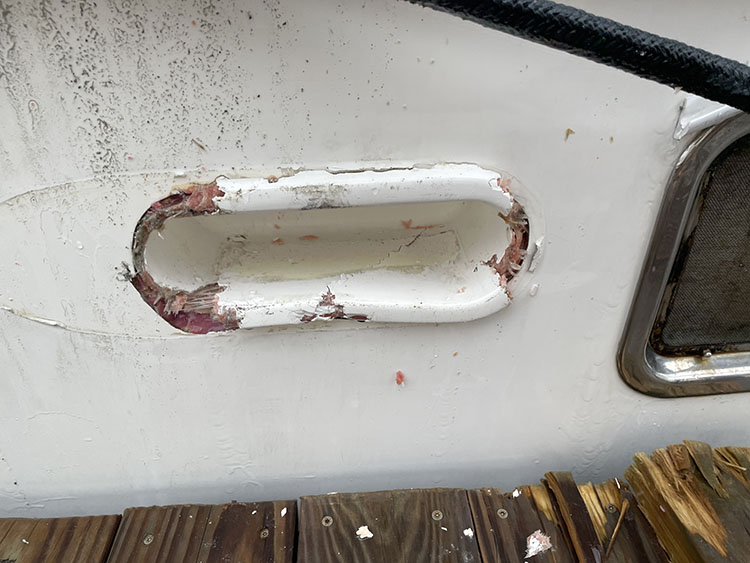
We were originally going to sail/motor up to Annapolis but decided that it made more sense to rent a car, drive up, and stay in a hotel, so that became the new plan. I’m glad we had changed our plans because tropical storm Ophelia was a direct hit on New Bern before we left for Annapolis, and Cerca Trova got badly beaten up at the dock. This left our boat unable to go anywhere as we had extensive damage along the port hull. Sigh, one more thing to repair.

It had been years since we attended the Annapolis Boat Show, so it was fun to drive up and spend a few days working the show for the Panama Posse. There were way more catamarans on display than monohulls, and I did go on a few, but why tempt myself with things I couldn’t have, so I spent most of my time visiting with people at booths that had products of interest to me for our boat. It was also great to get off the boat and stay in a hotel for a few nights. Long, hot showers and a big bed were welcome benefits.

Some of the hull damage from Ophelia

Back on our boat, I was faced with the storm damage and still way too many other projects to complete. Based on multiple recommendations, I contacted the best fiberglass repair person in the area. His name was Bruce as well. Unfortunately, he splits his time between New Jersey and New Bern, NC, and he was currently in New Jersey working on his boat. He came into town two weeks later and started on our boat right away. My job was to prep the damaged areas and purchase supplies. Manta catamaran owners are a tight-knit group with multiple channels of communication. We have a very active user group, so I reached out to see who had extra rub rail material, as about 6’ of ours had been damaged. Someone got back to me quickly with two 8’ sections, so I purchased them and had them shipped to us at the marina.

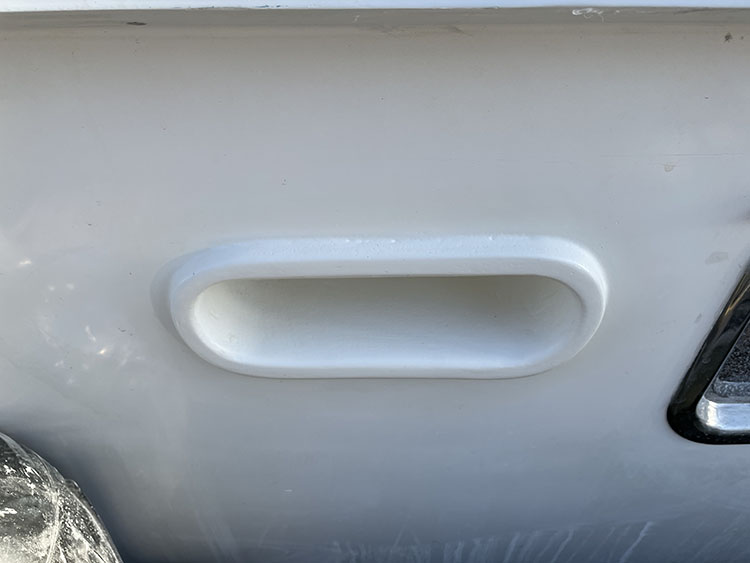
Step repaired

Bruce did a fantastic job of repairing the fiberglass and gelcoat. He was done in a week, and we gladly paid him the $3200 he requested. It was a big dent in our budget though. I still had some projects that needed attention before we could leave, so I focused on crossing the remaining tasks off the list.

With the fix and repair list completed, we were finally ready to head south at the beginning of November 2023. We were sad to leave New Bern, but it was getting colder, and we needed to seek warmer weather. We left New Bern on the 2nd heading south in no real hurry.

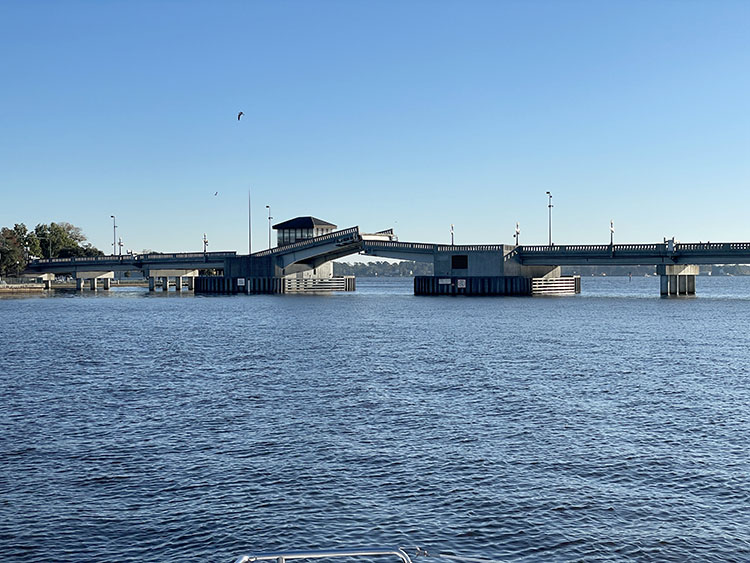
Bridge opening for us to leave New Bern

Up next, our trek down to Florida to prepare for our winter adventures, or not.

Beaufort, SC to New Bern, NC – Summer 2023

Sunset at Lady’s Island Marina, SC

Lady’s Island Marina in Beaufort, SC is where Cerca Trova summered before our ownership, and the previous owners had a reservation for 2023 that we took over. We decided to stay at Lady’s Island Marina for a month to do some repairs and settle in for a bit. It was nice to have a little stability for a change. Constantly moving on almost a daily basis can take its toll.

The marina has an old pickup truck they lend to their slip customers for an hour at a time. Frankly, one hour is not enough time to go grocery shopping, but they were firm on the time. We just never got the truck back within an hour. It was usually an hour and a half, but they never complained.

Many packages were waiting for me when we got to the marina, so I got busy with the repairs the next day. The list was quite long:

  • Replace the freezer compressor fan with a more powerful one to help with cooling
  • Replace the burned-out starboard engine blower
  • Replace the Furuno PG700 heading sensor (electrical storm damage)
  • Replace the Furuno IF-NMEAFI analog to NMEA2000 converter (electrical storm damage)
  • Replace the poorly crimped butt connector between the alternator and the Sterling Alternator Protection Device
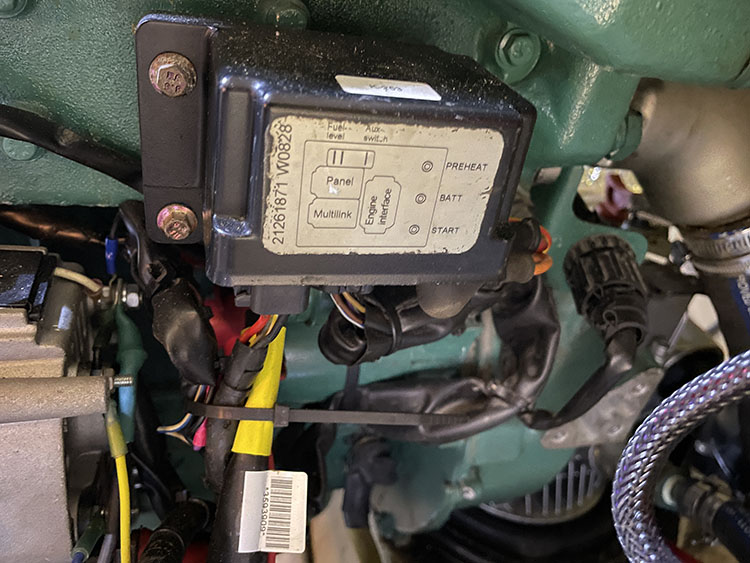
  • Remove the dead Volvo Penta MDI (Mechanical Diesel Interface) black box on starboard engine and test the Multilink cable for continuity
  • Change all watermaker filters and clean the strainer
  • Replace starboard engine tachometer with a rebuilt one
  • Add 5″ duct from refrigerator/freezer compressor fan to washer/dryer locker
  • Replace defective inlet pressure transducer on watermaker
  • Replace the dead MDI box on starboard engine with a new one
  • Add stainless screens to the four engine vents and the galley stove vent to prevent bugs and other critters from entering the boat
  • Have someone climb the mast to install a new wind transducer (electrical storm damage) and remove the TV antenna
  • Rewire the entire NMEA2000 electronics network properly
  • Replace the empty propane tank with a full one
  • Replace copper ground foil for SSB radio
  • Replace wrong size hose clamp on the water inlet to the aft washdown hose to stop it from leaking
  • Update firmware on the Furuno MFD and other Furuno devices
  • Replace the broken cockpit hatch
  • Replace galley stove igniter battery and battery holder
  • Add King Starboard rails to slide stove in and out more easily
  • Replace cockpit speaker wires
  • Replace saloon speaker wires
  • Replace cockpit speakers
  • Replace gypsy, two cone clutches and two seals on windlass
  • Replace stereo and clean up wiring in TV/Stereo cabinet
  • Have dealer replace screen in screen door
  • Have a diver clean the bottom and replace the port saildrive zinc screw
  • Polish vinyl windows in cockpit
  • Rebed port forward saloon window top to prevent leaks
Volvo Penta MDI box

And after thousands of dollars and lots of hard work, the list was completed, for now. In addition to the boat projects, we got our eyes examined, purchased new glasses, and went to the dentist to get our teeth cleaned and checked. I’m proud of what we were able to accomplish in only one month. We were both exhausted and ready to stop working and move on.

Galley stove removed

When I was cleaning the ICW mustache – what locals call the brown scum that collects on the hull after traveling on the ICW – I saw black soot on each hull around the engine exhaust ports, so after a little Google research, I found I needed to get the diesel engine injectors cleaned, as they had never been cleaned in over 2,000 hours of use. I didn’t feel I knew enough about the Volvo Penta engines, so I scheduled a qualified company to remove the injectors and have them tested. This was to be done in Charleston, SC, so I made an appointment and off we went.

Moonrise at White Point Landing anchorage

We Left Lady’s Island Marina at 9:30 am on Lynette’s birthday, August 1st. We didn’t want to push it, so we dropped anchor at 4:50 pm at White Point Landing. This was a little sporty anchorage but not too bad. We knew that the tides have a range of about 8′ in this area, so we anchored in about 15′ of water as it was high tide when we arrived, and didn’t want to ground at low tide.

The next day we weighed anchor at 9:45 am and went the 24nm to Charleston. The Safe Harbor Charleston Marina put us on the outside dock, which was not protected at all. I called the office and they said when we got fuel, they would move us to the inside of that dock. We were both a bit tired, so we waited until the next day to get fuel and move the boat to the other side of the dock. All went well and that side of the dock was much quieter. I’m glad I asked to be moved. It never hurts to ask, right?

It took several days for the Volvo mechanic to schedule us to remove the injectors. When he arrived, he had a trainee in tow, so each worked on an engine. We found out the hard way that the fuel return lines from both engines didn’t dump into the top of the tank, but rather had a tube that went to the bottom (I’m assuming) of the tank. This set up a siphon that drained fuel into the bilge. There was no valve in the return lines to shut off the flow, so the mechanics put a bolt in each line with a hose clamp. That seemed to stop the flow. They took the injectors and left for their shop.

We woke up the next morning with the port bilge full of diesel, almost to the top. I texted the mechanics and they came quickly to deal with the issue. They brought a pump and pumped out over 10 gallons of diesel from that bilge into 5-gallon buckets that we filtered back into the boat tank using our Baha Filter. The mechanics then fabricated a better solution to stop the diesel from leaking. What a mess to clean up. I spent all that day scrubbing the bilge with bilge cleaner and dealing with the dirty liquid. Not fun and the boat smelled so bad that we had headaches from the diesel fumes for days.

The Volvo shop person called and said that the injectors were in bad shape and needed to be replaced. Volvo distribution had no injectors for our engines in the US, of course, but they did have spare parts, so the Volvo shop rebuilt the injectors. A few days later, one of the mechanics came back to install them. All ran fine and I haven’t had any soot buildup on the hulls since then. Next time I will do the job myself and save a ton of money.

While we were in Charleston I noticed a leak in the starboard head cabinet under the sink, so while investigating where the leak was coming from the thru-hull drain fitting for the air conditioner cooling water broke and started flooding the area with salt water. I figured out it was the air conditioner cooling water and turned off the AC unit to stop the flow of saltwater into the boat. I now had a new issue to fix, on top of finding where the original water leak was coming from inside that cabinet. Ah, boat life. Never a dull moment.

To replace the thru-hull fitting required going under the bridge deck between the two hulls. There is only about 15” of space between the bridge deck and the water where the thru-hull fittings are located. My neighbor graciously loaned me his kayak so I could float under the boat. I could barely fit under the bridge deck to replace the thru-hull fitting, but I was able to get it done and reattach the drain hose. One issue was fixed.

While I was borrowing the dinghy, the owner of the boat behind us asked if I could help him from the water to tie straps around his dinghy. I obliged and he offered to take us to Whole Foods, Ace Hardware, and a liquor store for supplies a few days later. Very nice.

The original leak I was looking for wound up being a broken 3-way valve, used to change from fresh to salt water for the toilet. It was broken and every time water was turned on somewhere in the boat, it gushed out of the valve. Luckily, there was a spare onboard, so it was easy to replace. It’s all fixed for now.

Charleston farmers market

The Safe Harbor Charleston City Marina is right near downtown, and the marina has a free shuttle that takes people to and from the farmers market, grocery stores, and West Marine. We took advantage of the shuttle and went to the farmers market to explore. It made for a nice day away from the boat and boat projects. Sometimes you need to take a break from the daily grind.

Dinner and drinks with friends

The highlight for us was that friends came to visit for a day, providing a chance to catch up on our lives and show them Cerca Trova. We topped off the visit with a very nice dinner and beers at a local brewpub.

We left Charleston on the morning of August 12th heading to Santee Bay. We passed through some very skinny water, less than 5’ in some places. Our depth alarm sure let us know and so did the bottom a few times. Luckily it was only sand and mud. Along the way, we passed the dredge that was working its way down the ICW, deepening the channel. What a very slow process. They run 24 hours a day and move very slowly. It was a tight squeeze between the dredge and shallow water, but we made it past the dredge without incident.

We were able to take advantage of a weather window and went outside the ICW for a portion of our trek to New Bern, NC. The window provided a brisk broad reach from Little River, on the border of North and South Carolina, to Cape Fear, NC. After three anchorages since leaving Charleston, we were out in the ocean sailing for the first time in what seemed like forever. It was a brisk sail with a double-reefed main and full jib. Our top speed in about 18 knots of wind was almost 8.5 knots. It was nice to get the sails up and enjoy the ride.

Our anchorage for that night was at Carolina Beach, NC on the ICW. This was a cozy little anchorage off the ICW near some docks and homes along the banks. After the brisk day of sailing, it was nice to have a very quiet place to sleep.

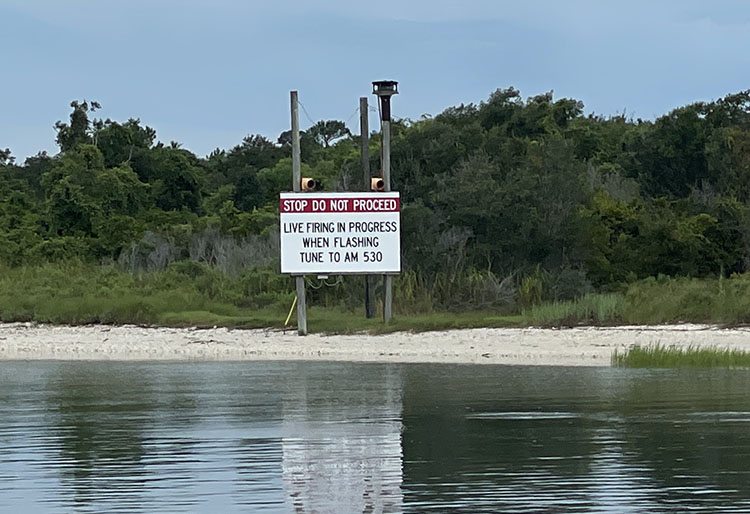
We stopped at two more anchorages before reaching New Bern, NC. Along this route, the ICW goes through Camp Lejeune where the Marines often practice with live ammunition. By reading the notes on our digital charts I learned that the ICW is often closed in this area due to these live ammo practices. The notes had a phone number, so I called it to see if the ICW would be closed when we planned to pass through. There were no activities planned for the day, so we were clear to pass through Camp Lejeune uninterrupted. It pays to read the chart notes and comments from other mariners. They can be helpful.

Camp Lejeune warning sign

We arrived at New Bern Grand Marina on August 18th around 2:45 pm after fueling up at another marina nearby. We were on the outside of a breakwater dock and when the winds came from the East, it got a little rough. There was no other dock space available, so we had to live with the situation. Luckily it didn’t blow from the East all that often. We planned to be here for about a month and then head north to the Chesapeake Bay to explore the area.

Next time; enjoying New Bern, changing plans, more projects, and weather issues.

St Petersburg, FL to Beaufort, SC – Summer 2023

We’ve been in St Petersburg for a week now and are planning the process of readying No Regrets for sale and finalizing the purchase of our new-to-us catamaran. We have rented an ADU (accessory dwelling unit) from a couple. It is above their garage and fully furnished as we do not have any furniture. Living here for a couple of months will give us the space and time to work on No Regrets without living in the mess the boat will be in. The landlord graciously allowed us to store our stuff from No Regrets in their garage, so we didn’t have to rent a storage unit.

We cleaned, fixed, varnished, painted, and performed general maintenance on No Regrets to prep her for pictures for an ad and make her presentable for showing. First on the list was to move as much as we could off the boat and into the garage. Doing this gave us the room to clean and work on the inside.

At the same time, we were jumping through hoops to find insurance and secure a loan for the new boat. Finding insurance was a bit difficult as many companies won’t insure catamarans anymore, and many have restrictions on where the boat can be sailed. We wound up with a Markel Jackline policy. It wasn’t inexpensive, but it did provide us with a very large sailing region that covered the entire Caribbean Sea Securing a loan was also difficult as there was only one lender that would underwrite loans for liveaboards. As of spring of this year, they no longer underwrite loans for liveaboards.

We did secure a loan and insurance, closing on our new-to-us boat, Cerca Trova, in mid-April. We moved out of the ADU shortly after that and onto our new home. It was nice to have more room, but we still had way too much stuff, even for a catamaran. I can’t believe we had so much stuff on a much smaller boat. With No Regrets at her dock waiting for a buyer to come along, our focus changed to cleaning, fixing, and doing updates on Cerca Trova.

The very first day on Cerca Trova had me troubleshooting an alarm going off in the boat. Argh, this should have been a warning. I figured out that it was a bilge alarm. My first new boat project was to replace the starboard bilge pump float switch which was the cause of the alarm, a rather simple project. The first of many projects to come.

Lynette was busy cleaning and sorting out what we needed and didn’t need on the boat. New rugs in the bathroom, new shower curtains, new sheets for both beds and new towels for the guest side of the boat. I started learning about the systems on Cerca Trova as this boat was new to me and quite a bit more complicated, with a different watermaker, generator, two air conditioners, and a different brand of electronics. Lots to learn about.

The next system to break was the refrigerator/freezer compressor. It overheated because the cooling fan stopped working. We used Lynette’s hair dryer and the saloon fans to keep the compressor cool. It worked until I could purchase a new fan and install it. Another rather simple project. Then the AC stopped working. I figured out, with a call to a very nice AC tech, that it was an overheating error and so had to clean the raw water strainer for the AC units. Yet another easy fix. All within the first week of living on Cerca Trova.

Meanwhile, we had several lookers and two surveys on No Regrets by the time we were ready to leave St Petersburg. As we were readying to leave, the last prospect turned into the buyer, and we struck a deal for less than we wanted but given that we were leaving it made sense to let No Regrets go for their offer. We concluded all the paperwork while underway and sent off the final documents while we were in Coconut Grove.

I had taken for granted that I knew all the systems on No Regrets, as I had installed them all. My stress level was quite high when we took off on Cerca Trova from St Petersburg on June 1, 2023. During my first attempts to use and understand our new autopilot, I had an accidental jibe that had the boom break the helm hatch right off its hinges. Live and learn. Keep the hatch lower than the boom.

Preparing to dive and clean the propellers

We didn’t have the bottom cleaned before we left the marina, which was a mistake. The engines would only rev up to 1800rpm. Normally they could go up to 2800rpm. I assumed the props had barnacles on them, so at our first anchorage at Otter Key I dove in and cleaned them. They were heavily covered with barnacles.

The admiral at the helm to Otter Key

Otter Key is a lovely and quiet anchorage. As we weren’t in a hurry, we stayed for 3 days just hanging out and enjoying the space on our new boat. It was nice to just do nothing and not worry about any deadlines or schedules. When we left Otter Key, I was able to get the engines to rev up to our normal cruising speed of 2600rpm, so cleaning the props worked. Another simple fix.

As we worked our way south along the West Coast of Florida, we anchored at Don Pedro, Pelican Bay, and Big Carlos Pass Bridge before doing our first overnight to Marathon in the Keys. These were day passages that were easy and uneventful. When we got to Big Carlos Pass Bridge, I couldn’t reach the bridge tender to request a bridge opening, so we anchored outside the bridge for the night. I did some calling around and found out you need to make an appointment to have the bridge opened. It was damaged in Hurricane Ian, and to open it required bringing a generator to the bridge for power as the electrical wiring had been damaged and they were waiting for parts. Bringing a generator to the bridge was quite an ordeal and not something they did very often. We were happy to just anchor outside the bridge for the night.

The burnt wire

Several times on passage the electronics blinked out and then restarted. The last time it did this we were on our way to Pelican Bay, and they didn’t come back on. Quickly I used Navionics on my phone (always have a backup) and was able to successfully get to the anchorage and set the hook. Upon examination of the electrical circuits, I found a badly charred jumper wire in the electrical panel. There were spare parts onboard, so I made a new jumper wire and got the electronics back up and running with no further issues.

Spinnaker run between Marathon and Garden Cove

On our way to Marathon, Lynette fell getting off the aft cockpit seat. She was in quite a bit of pain for days. This just shows how quickly accidents can happen onboard. We stayed at Marathon for an extra day hoping she would feel better. She was still in pain when we left on July 10th for Garden Cove South anchorage. We overnighted there and took a mooring ball the next evening at Dinner Key in Coconut Grove, FL, which is just south of Miami. Lynette was still hurting, so we made an appointment for her to see a doctor and get an X-ray. We had thought she had a cracked or broken rib. Nothing was broken and they sent her packing with a 600mg Ibuprofen prescription. She did get better over time and the Ibuprofen helped with the pain. We were lucky this time. It could have been worse.

Hillsboro Inlet lighthouse and condos

In the morning of June 13th, we fueled up and headed to Hillsboro inlet, a 41.5nm passage. Hillsboro inlet has a tiny cove surrounded by older condos. There’s a drawbridge and a lighthouse, which makes it quite a picturesque place, except for the condos. When we arrived, there were several police boats at one of the anchored boats with their lights flashing. We weren’t sure what was going on, so we stayed out of their way and found probably the last place to anchor in that little cove.

The next morning, we were off to Lake Worth to visit some Panama Posse friends whom we had met in San Diego. We’ve met so many great people being a part of the Panama Posse and this couple were some of them. They were moored at Lake Worth for the summer. They offered to make us dinner and bring it over to our boat, so I broke out a fresh bottle of Bourbon and we had a great meal and caught up on what had been happening since we last met up. They came back to our boat the next night for beers and snacks. It was so good to see them and catch up on things. We sadly left them the next morning, pointing our bow north up the ICW.

While I managed most of the day-to-day running of the boat and preparing routes to follow, Lynette researched places to anchor within a reasonable distance for daily travels. Reasonable distance amounts to approximately 40nm per day. Peck Lake was our next anchorage, which is a wide spot in the road, and satisfied our daily run distance of 40nm. Nothing special here, just a place to park and sleep for the night.

Lynette found a quaint little anchorage up a narrow channel for our next night, called Faber Cove. It was a small circular little cove with small houses all around the perimeter. There was only room for a couple of boats to anchor and we were the only ones there. We enjoy finding places like Faber Cove to anchor as opposed to wide spots in the road. They make our travels more interesting.

Our next night was just north of Melbourne called Paradise Blvd. This was another wide spot in the road. We had just dropped the hook and were in time for a SpaceX rocket launch from Cape Canaveral. Since we were south of Cape Canaveral and the wind was blowing south, we had our best opportunity to hear the roar of the rocket engines as the rocket ascended. I find rocket launches to be quite spectacular. Growing up on the West Coast of the US, I had never seen a live rocket launch. Being near Cape Canaveral and watching live rocket launches wasn’t really on my bucket list, but I would say it is up there as things I wanted to see.

 Every night on our passage up the East Coast of Florida we had thunderstorms. The wind comes up in the evening and we get to experience a spectacular light show. Of all the things that I can be afraid of while sailing the oceans, lightning is probably my most feared event. You never know if you are going to get hit by lightning, and when it’s all around you the chances go up. Plus, it doesn’t help that we have this 60’ lightning rod attached to our boat. We have two static suppressors at the top of our mast and a grounding cable that we attach to the base of the mast and toss the other end into the water to ground the mast. I’m not sure how much this deters the lightning, but we have yet to get a direct strike (fingers crossed).

Maximum wind speed

Titusville was our next stop. We had come full circle to our northernmost point in Florida, having gone all the way around Florida from Titusville to St Petersburg and back in about 6 months. We planned to spend a couple of days in a slip to take on supplies, but they didn’t have a dock available when we arrived, so we took one of their mooring balls for the night. That night we witnessed our worst lightning storm. I had the wind instrument on to track the wind speed and was watching as it hit 51 knots. Suddenly there was a bright flash and a simultaneous loud boom. The wind display went blank. We hadn’t been hit by lightning, but it was very close. The next morning, we took our slip at the marina, and I got to talking with some people on the dock. Everyone said the previous night’s thunderstorm was the worst they had encountered.

I knew that our wind instrument had stopped working, but it was still spinning at the top of the mast. I felt sure we hadn’t been hit by lightning, as I assumed the wind instrument would have vaporized if we had. I turned on all the electronics to see what was still working. It seems everything was working except the wind instrument and the heading sensor that tells the autopilot which way the boat is pointing. So, a new project to focus on. This one was going to be a bit expensive.

I hired an electronics guy to come to the boat and help me diagnose the issue. He was recommended by the marina staff and was fair with his time and cost. $100 later, I had a plan to get back up and running. The problem was that we only had the slip for 2 days and there were no parts available in Titusville. After doing my research online I found a good price for the heading sensor and wind instrument, along with the black box that translates the wind instrument data to digital data for the other instruments (analog to NMEA2000 converter). All that came to about $1500. The network wiring on the boat was poorly installed, so I decided to replace all the NMEA2000 network wiring and connectors for a cleaner and easier-to-understand installation. I think I spent about $2000 total and had it shipped to our next marina in Beaufort, SC where I would do the installation.

Sunset near Jacksonville, FL

Off we went up the ICW on June 22, 2023. We had heard that many people go offshore and pass by Georgia, as the ICW in Georgia has many shallows and is very crooked. It is mostly marshland with not much to see. Since we were without a wind instrument and an autopilot, we decided to take the long and winding route through Georgia via the ICW. We anchored six times along the way to Beaufort, SC. Each passage was in the 40nm range that we were comfortable doing in a day. The passage to Beaufort was uneventful and a bit boring. We anchored several times in thick mud, which was no fun weighing anchor in the morning, but we did get it up every time. We also saw some dolphins along the way. Nice to see some wildlife besides birds.

Oysters for dinner!

We arrived at Lady’s Island Marina in Beaufort, SC on June 28, 2023. We would have arrived around 3:30 pm, but we missed the last swing bridge opening in Beaufort before the afternoon rush hour closing. We had to anchor and wait for 3 hours for the next opening at 6:00 pm. We radioed the marina and the dockmaster said he would wait for us and help us tie up. At 7:00 pm we were finally secured at the dock and ready for dinner and a good night’s sleep.

Next up, repairs in Beaufort and the passage to New Bern, NC.